
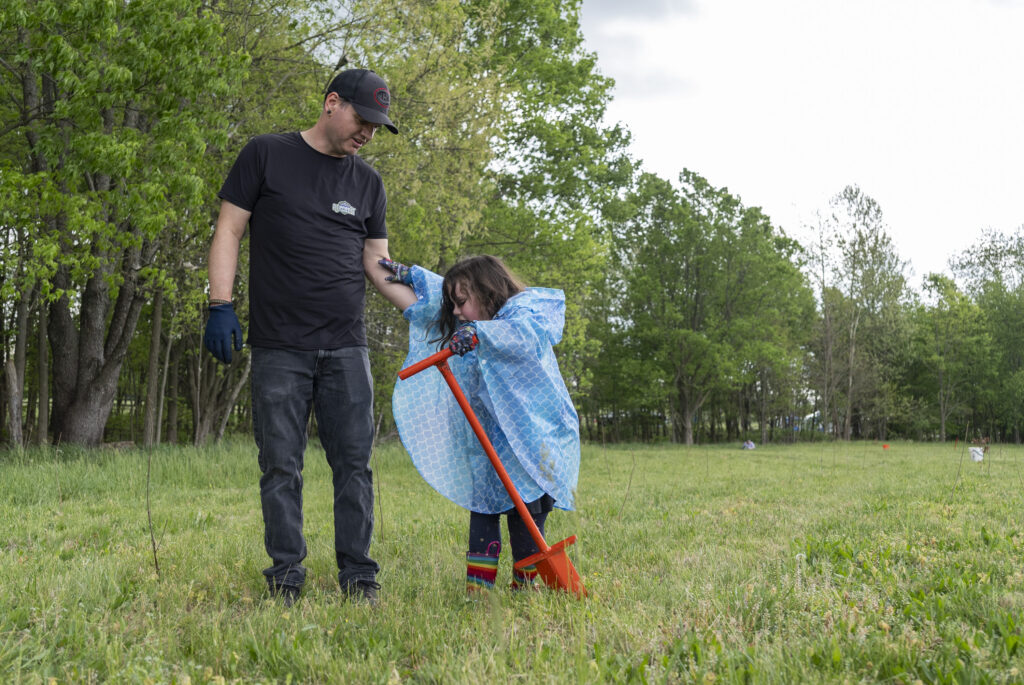
 A father and his daughter plant trees at the “Reforest the Bluegrass” eventat Coldstream Park in Lexington, Kentucky, on April 18, 2026. Peyton Tindall/The Watchdog
Editors’ note: Opinion articles published by The Watchdog provide perspectives of the writer separate from general Watchdog reporting.
Imagine, just for a second, that you are back in fifth grade. It’s Earth Day, so your teacher passes out those parfaits, the ones with the Oreos as dirt and the gummy worm on top, you know the ones I’m talking about, and the whole class gets a lesson on how to be environmentally friendly.
A basic rundown of what sustainability is, what recycling is and maybe even an activity that shows you how to calculate the size of your carbon footprint.
All well-intentioned, sure, but I have some hard truths for you. I hate to break this on Earth Day, but recycling doesn’t make a difference. That comes from a campaign in the mid-70s, advocated for by executives from Big Oil and Gas, who knew that recycling wouldn’t keep plastic out of landfills because, primarily, it isn’t economically viable.
The former president of the Society of the Plastics Industry, Larry Thomas, said “if the public thinks that recycling is working, then they are not going to be as concerned about the environment.”
Carbon footprint? Well, that’s in the same boat. That terminology originated in a 2004 campaign by the ad agency Ogilvy & Mather for British Petroleum (BP). And what happened in 2004 to prompt this? The Deepwater Horizon incident, the largest corporate oil spill by volume, released about 210 million gallons of oil. And who do you think owned the rig that caused the spill? British Petroleum. Better known to us as BP.
I could keep going. I’m not going to, but so much of the narrative around sustainability has been manipulated by companies, lobbyists or some other sycophantic public relations rep trying to find a way to make the company they represent not seem entirely evil.
They didn’t get everything wrong, though. Smaller environmental changes do come from the individual, and the individual should be concerned about their carbon output, but a real, lasting change? That requires a community.
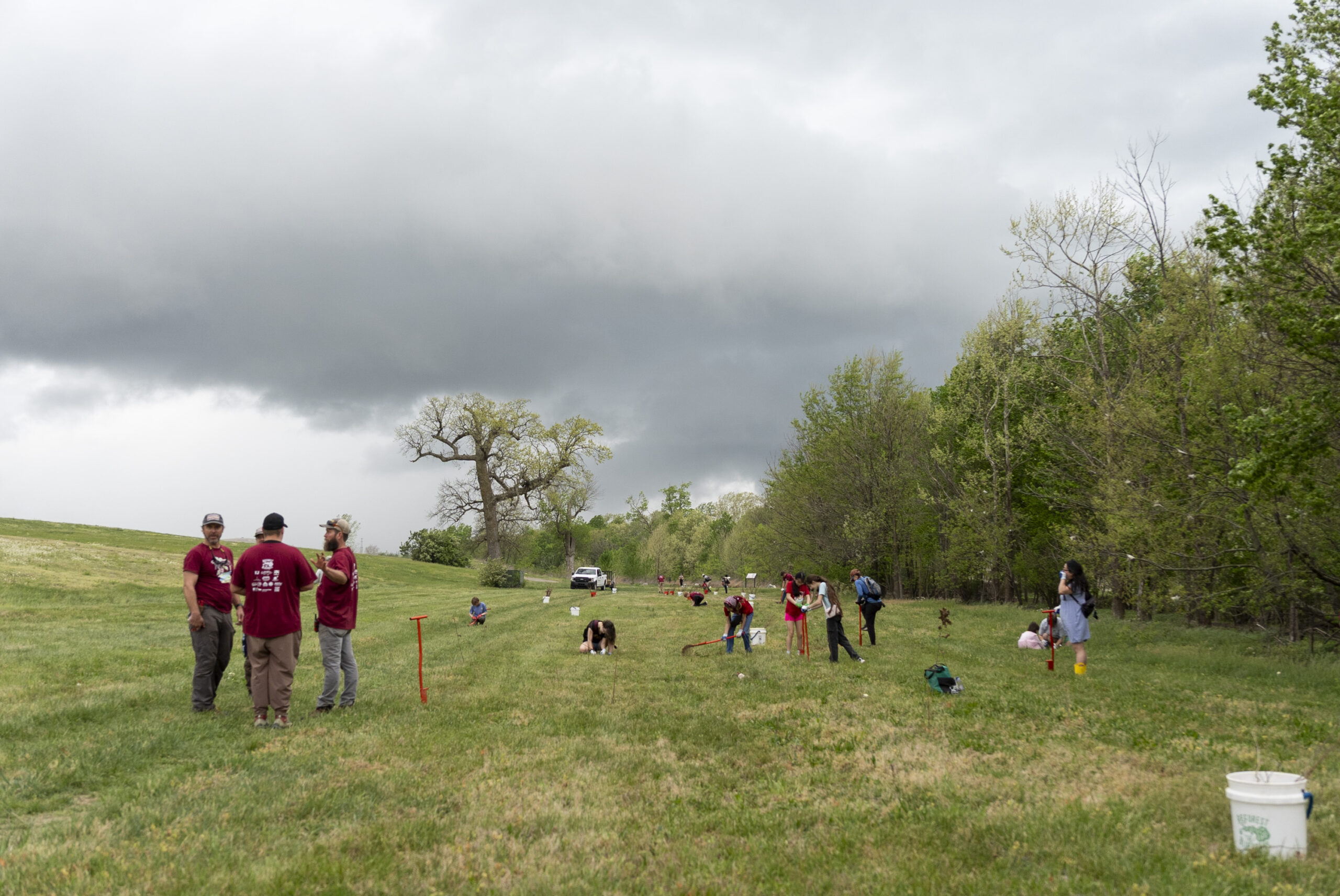 Community members plant trees at the “Reforest the Bluegrass” event at Coldstream Park in Lexington, Kentucky, on April 18, 2026. Peyton Tindall/The Watchdog
The concept of a community garden seems like a newer one, something that popped up around the same time that people began building backyard chicken coops. In reality, this idea is nearly as old as agriculture itself.
They’ve always been something that the community can lean on. The secondary aspect of being a place that supports the disenfranchised and disadvantaged was swept under the rug until recently.
In 2007, Seedleaf, a self-described “community gardening organization that provides horticultural training and opportunities to engage in the practices of gardening and small-scale farming in Lexington, Kentucky,” was founded.
This organization exists for the community. They have 10 “you-pick” gardens spread across the northern side of the city, all free for anyone to use. Beyond that, they have a 2-acre urban farm and a significantly larger 30-acre farm, dubbed Headwater Farm, located in North Fayette County, which is open by appointment.
Perhaps farming isn’t your forte. You would rather sit under a nice, shady tree. If you have an affinity for clean air, you might enjoy volunteering with Reforest the Bluegrass or TREES! Lexington.
Reforest the Bluegrass is an annual reforestation event that plants trees near streams and/or water bodies to improve riparian buffers, which in turn benefits the city’s water quality. Since 1999, the event has planted over 215,000 saplings across 20 different sites.
TREES! Lexington is the private response to the city’s sustainability initiative. TREES! is mainly focused on the 74% of the tree canopy on private land and spends its days maintaining the canopy in residential neighborhoods and training new tree stewards to do the same.
Both organizations have the same mission: reforesting the city of Lexington. Thanks to them and similar groups, Lexington had a 3% increase from 2012 to 2020, reaching 23% tree canopy coverage.
These are the things that make a difference. The biggest difference is the source of the instruction. It’s not a corporation, it’s not some fancy public relations firm writing from an office above the clouds, it’s not what they want you to think makes a difference.
It’s the community initiatives that change things, not what corporations want you to do. So, in honor of Earth Day, go out and be the change you want to see.
Leave a Reply