
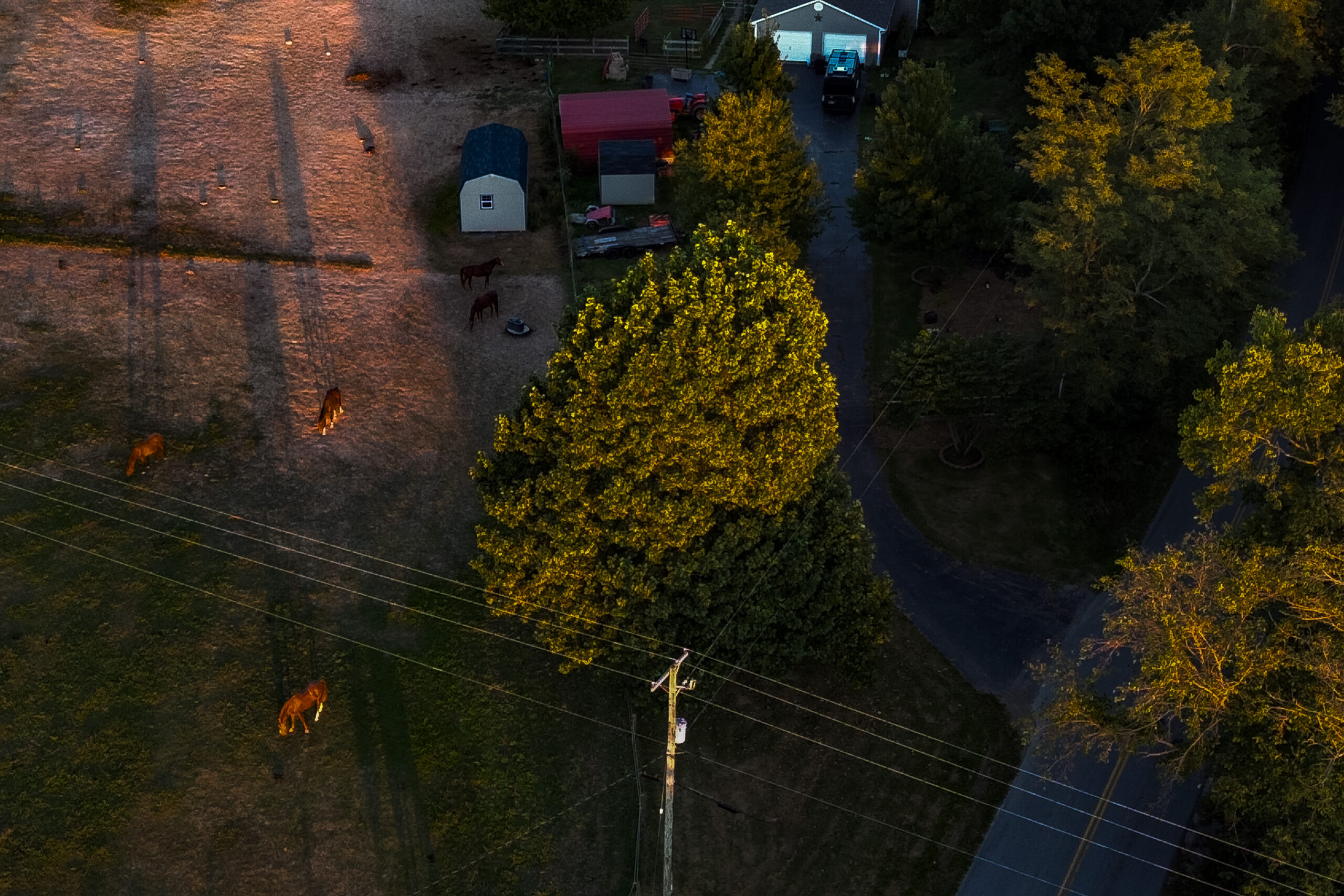
 Horses graze in a field which sits within the radius of where a proposed data center could be built in Harrodsburg, Kentucky, on Monday, Sept. 28, 2026. Christian Kantosky/The Watchdog
HARRODSBURG, Ky. – The Mercer County Fiscal Court unanimously denied an ordinance that would create Industrial Technology zones where data center development would be allowed.
The only agenda item for the special-called meeting on Monday, Sept. 28, was holding the second reading of the ordinance approved by the Mercer County Joint Planning and Zoning Commission on July 30.
According to the ordinance, it was meant to establish suitable locations and standards for the siting, construction and operation of data centers in Mercer County and Harrodsburg.
On Sept. 8, the Fiscal Court held the first reading of the ordinance, where no official action was taken. Because the ordinance was denied at Monday’s meeting, it will now go back to the Mercer County Joint Planning and Zoning Commission.
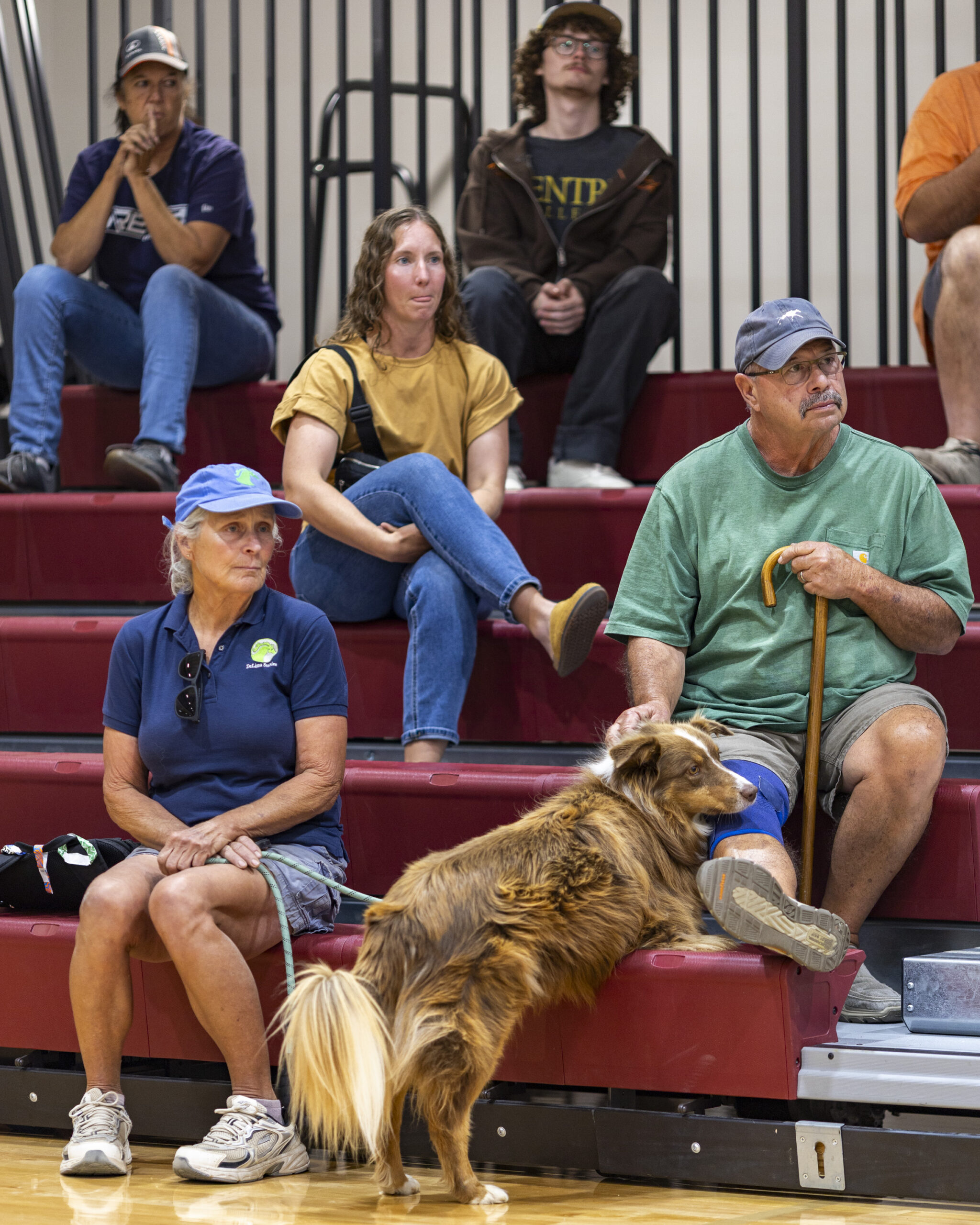 Mary De Lima, left, and her dog, Bo, listen to discussions during a special-called Mercer County Fiscal Court meeting at Campbellsville University Harrodsburg Athletic Center in Harrodsburg, Kentucky, on Monday, Sept. 28, 2026. Christian Kantosky/The Watchdog
Although Mercer County Judge Executive Sarah Steele said the ordinance did provide some assurances, including water service agreements, community benefit agreements and required environmental studies, there are “some questions and some unknowns.”
“I believe that planning and zoning has a great start on the regulations,” Steele said. “But I feel like there’s more work with integration.”
Steele acknowledged ongoing efforts to establish a Joint Harrodsburg-Burgin-Mercer County Planning and Zoning Commission and the development of a new five-year comprehensive plan.
Kentucky Revised Statute 100.183 states that comprehensive plans serve as a guide for public and private actions and decisions to “assure the development of public and private property in the most appropriate relationships.”
When she motioned to deny the ordinance, Steele said the county needed to ensure the zoning ordinance aligns with the new comprehensive plan, as well as work to understand the needs of Mercer County, Harrodsburg and Burgin.
“I am not completely anti-data center,” Steele said. “But we have to get this right before we approve it.”
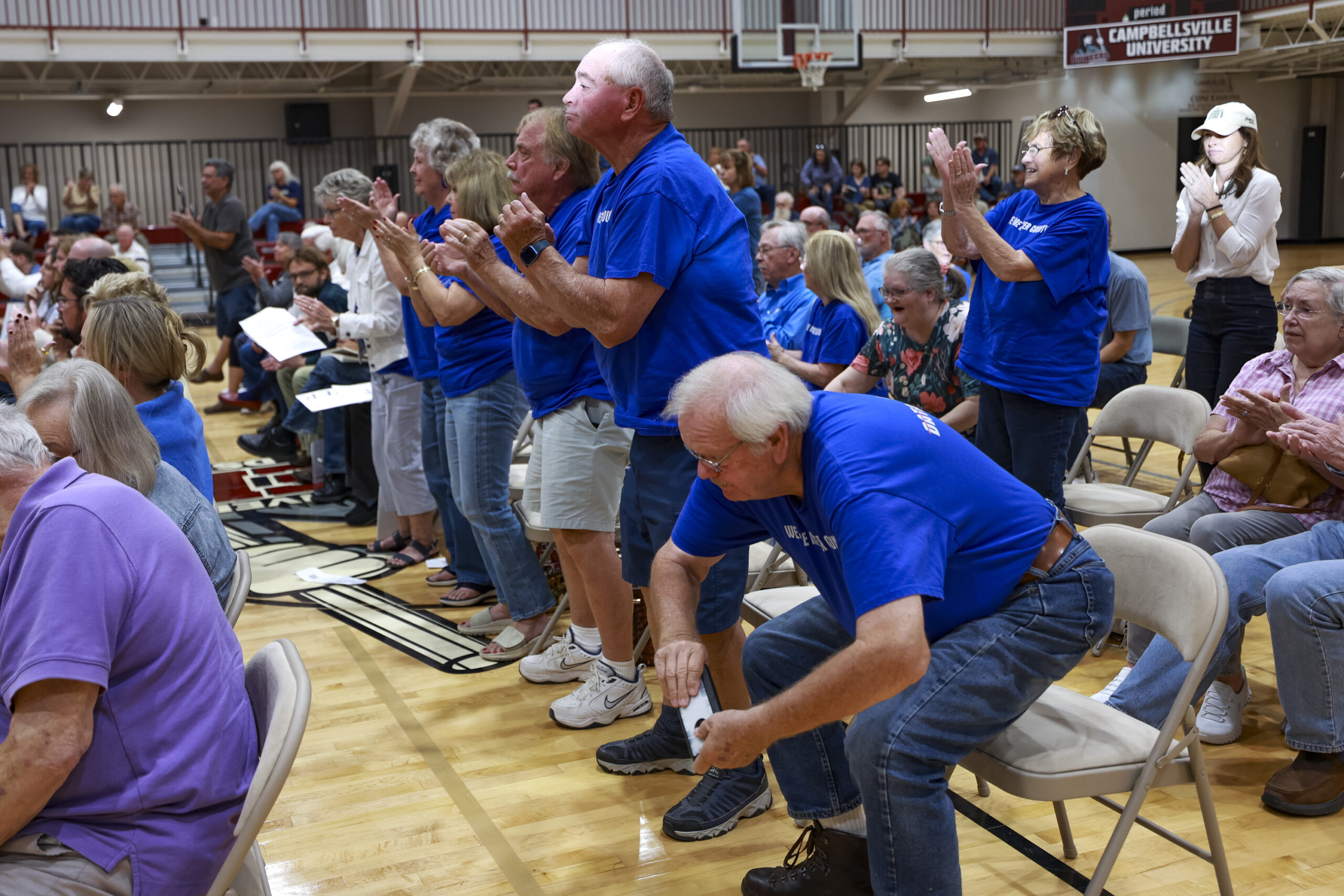 People clap after the proposed data center was voted back to the Planning and Zoning Commission at Campbellsville University Harrodsburg Athletic Center in Harrodsburg, Kentucky, on Monday, Sept. 28, 2026. Christian Kantosky/The Watchdog
Mercer County Magistrate Susan Barrington called what her district was facing “unprecedented,” saying the construction of a hyperscale data center would cause significant, permanent damage to her district.
“The very fabric and treasures that make District 4 so unique and special are being threatened by a hyperscale data center,” Barrington said.
Citing concerns such as the destruction of top soil, continuous light and noise, water and energy usage, and impacts on the county’s tourism, Barrington said she “adamantly” believes all hyperscale data centers should be prohibited in Mercer County.
The ordinance outlined a 1.5 mile radius where data center development would be allowed, according to Barrington, which would border Shaker Village of Pleasant Hill and be adjacent to Herrington Lake and several lake subdivisions.
Billy Rankin, the CEO and president of Shaker Village, said he believed anything within five miles of the landmark destination would be an inappropriate location for a data center.
It was not just the proposed location that was of concern, according to Rankin, but also ensuring the correct processes were in place to protect the community and environment.
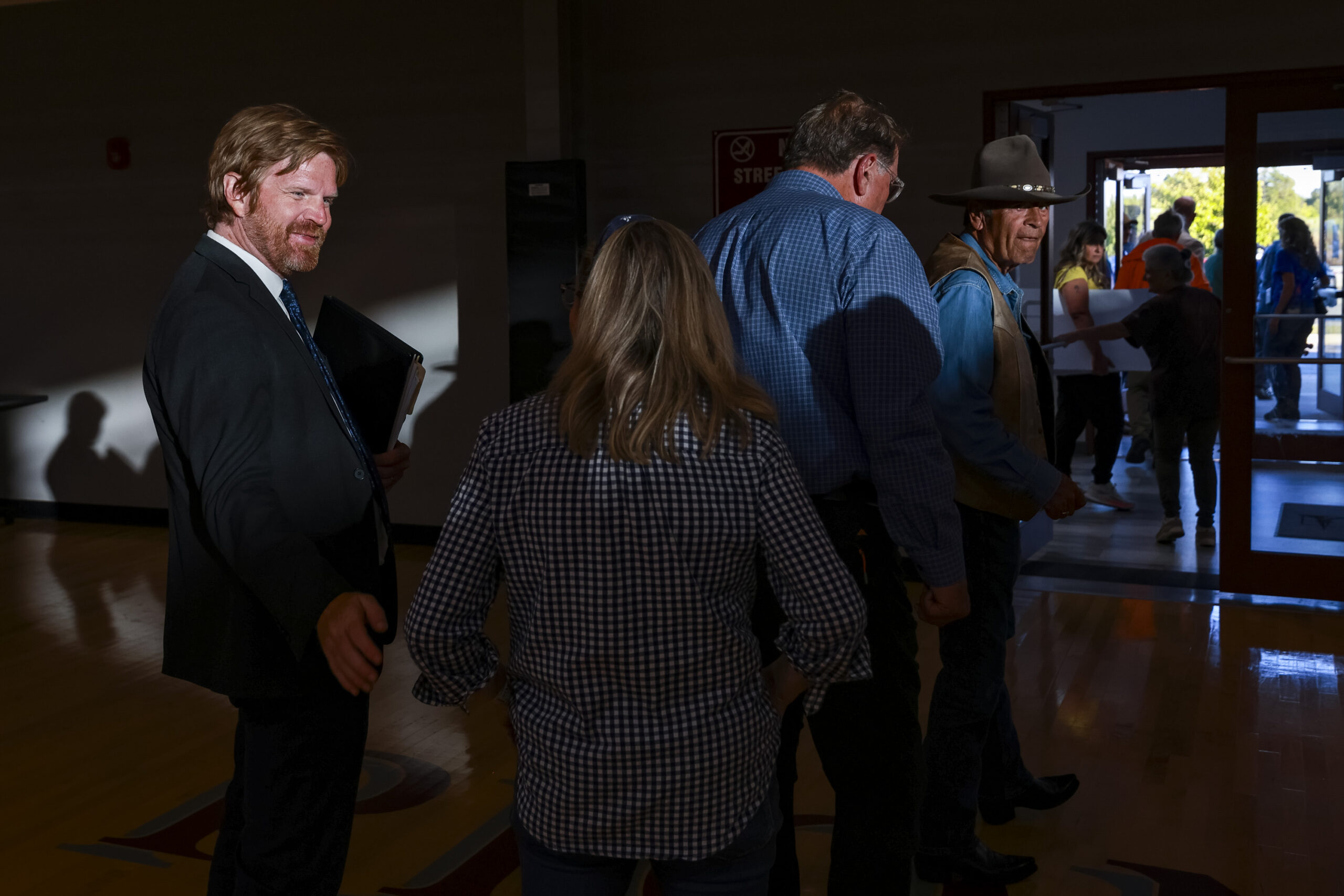 People exit the gymnasium after the proposed data center was voted back to Planning and Zoning Commission at Campbellsville University Harrodsburg Athletic Center in Harrodsburg, Kentucky, on Monday, Sept. 28, 2026. Christian Kantosky/The Watchdog
Moving forward, Rankin said it was important that research and work be done with the comprehensive plan to determine what is best for the county as a whole, saying the Fiscal Court’s action on Tuesday was “a good step, but it’s just a first step.”
“What’s most important now is that the comprehensive plan is done with the correct due diligence, with the right collaborations, with the right kinds of investigation so it can be fully thought out, and not done with the preconceived or predestined outcome of accommodating a data center,” Rankin said.
Mercer County resident Dana Hanson said she hopes the planning and zoning commission “realizes the shortcomings” in the ordinance, fixes them and presents the public with a new ordinance.
“I think we do need one in the event that one (a developer) approaches us again,” Hanson said. “I mean, here we are.”
Although Hanson was glad the Fiscal Court denied the ordinance, she said she felt more could have been done to address the community’s concerns.
“There’s a lot of things they could have done, I think, to help ease the public and let them know that they were fighting for us instead of against us,” Hanson said.
Leave a Reply