
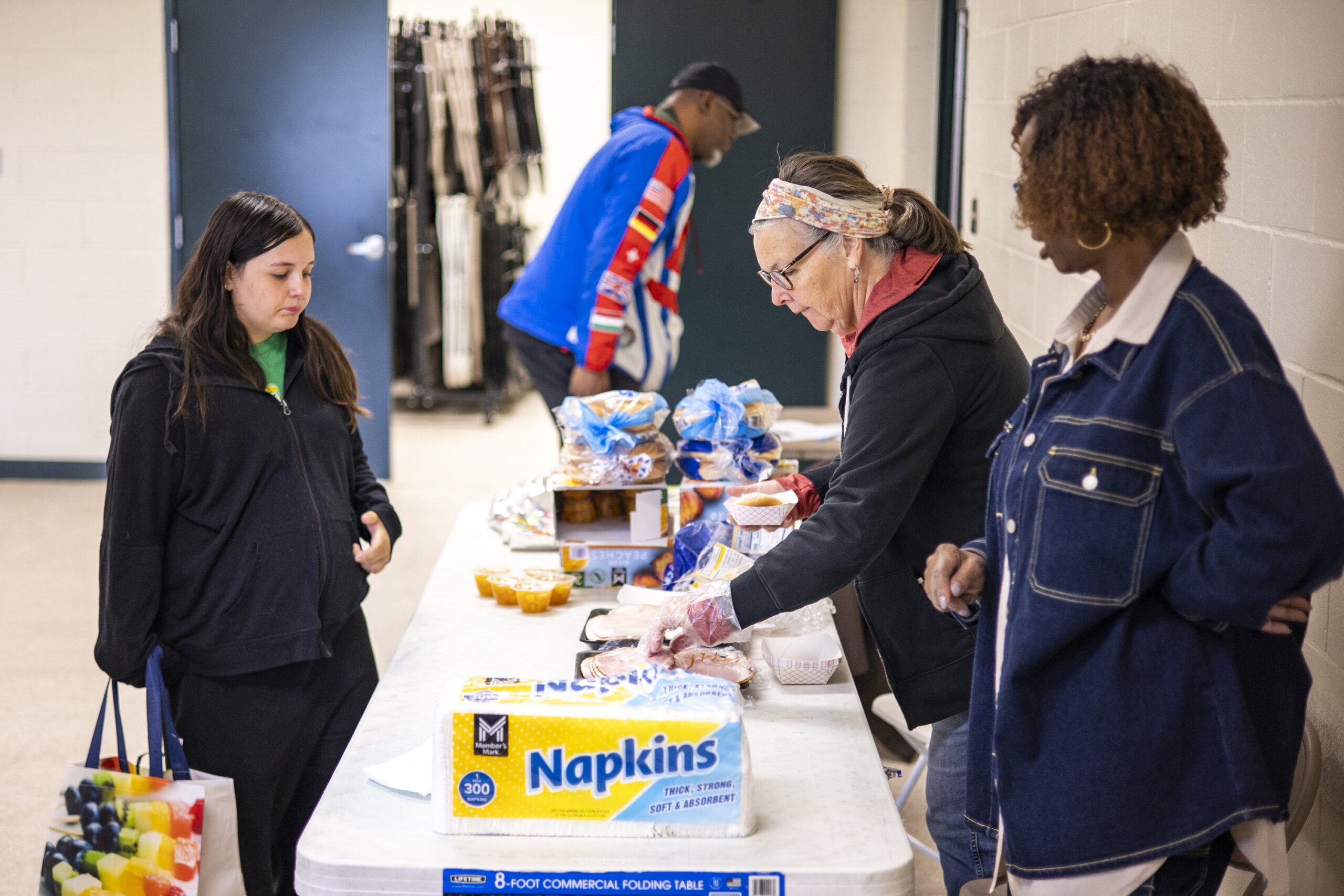
 Dana Stephens, right center, serves sandwiches while Mary Jones, right, talks with kids during “Hunger Doesn’t Take a Spring Break” at Coolavin Park in Lexington, Kentucky, on Wednesday, April 8, 2026. Christian Kantosky/The Watchdog
The “Hunger Doesn’t Take a Spring Break” program provided children of Fayette County Public Schools with meals, snacks and activities during the district’s spring break.
Working with several community partners, Lexington’s 1st District Council Office led the program for the fourth year, setting up seven locations during the week of April 6, including Green Acres Park, Douglass Park and the Dunbar Community Center.
Tyler Morton, 1st district councilmember, served as a staffer under Tayna Fogle when she launched Hunger Doesn’t Take a Spring Break in 2023.
Now an elected official himself, Morton said much of his platform has centered around sharing information and resources with his constituents, leading him to continue the program under his leadership.
According to Morton, the district he represents is the “most underserved,” pointing toward the need for a program such as Hunger Doesn’t Take a Spring Break.
“We did it through spring break, but the reality is year round we have children that are hungry, and that should not be the case,” Morton said.
This year, to move beyond Lexington’s 1st District, the program opened a new location at the Tate’s Creek Community Center.
After 8th District Councilmember Amy Beasly was asked by her constituents why there was not a program like Hunger Doesn’t Take a Spring Break in the area, Morton said she approached him to set up a location in her district.
“She put the solution forward,” Morton said. “She said, ‘Let’s take it out here, let’s not recreate the wheel, let’s just move it a little bit.’”
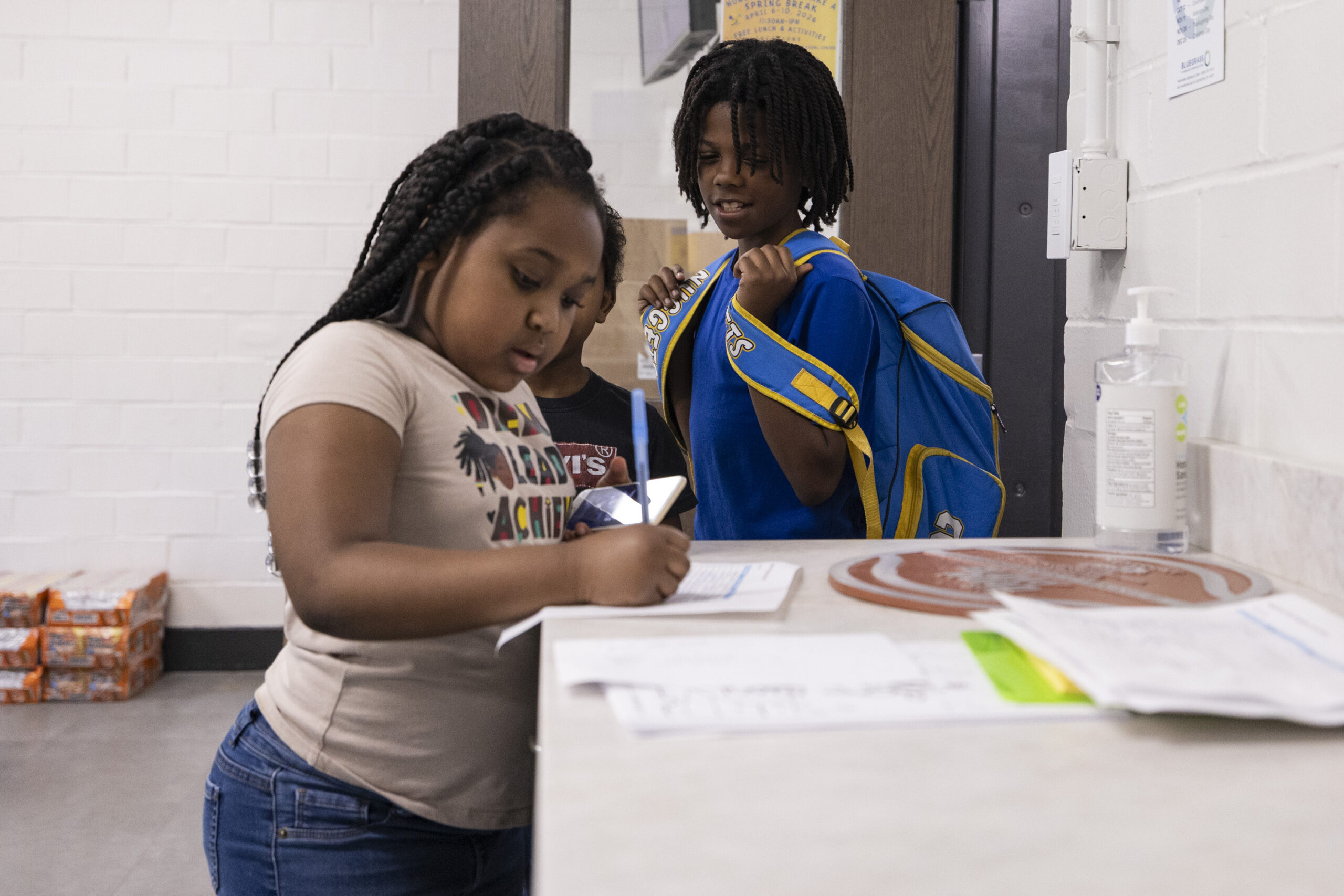 Young students attend the “Hunger Doesn’t Take a Spring Break” initiative which provides free meals and activities to children during school breaks between Apr. 6-10, 2026 taking place in Dunbar Community Center Lexington, Ky. Peyton Tindall/The Watchdog
Annette Dixon, a Lexington resident whose family regularly visits city parks, said for low-income families, Hunger Doesn’t Take a Spring Break and similar initiatives can provide substantial impact.
“Some kids, you know, they don’t know when their next meal is coming,” Dixon said. “As long as they got a center like this, and they got the FoodChain, they can always make sure they’re going to have something to eat. Something, if it’s just a little soup cup, is better than nothing.”
Each day of the program brought a different option, including sandwiches, pizza and fried chicken. Adina Tatum, one of Morton’s legislative aides, said throughout the initiative, the program had around 3,500 meals to hand out.
Some meals were made by volunteers, such as sandwiches, and others came from restaurants.
Along with a meal, attendees were given a bag to fill with chips, apple sauces, juices and other snacks to take home for the remainder of the day.
“It’s been really great seeing [the program] grow into what it is,” Tatum said. “It just shows that it’s a need, and we love being a part of it.”
During a trip to Sam’s Club for the 2025 installment of Hunger Doesn’t Take a Spring Break, Tatum said they had to rent a U-Haul truck to pick-up all the snacks they had from the store.
“We showed up with the pickup truck, my husband’s pickup truck, thinking we were picking up all these snacks,” Tatum said, “and they had nine pallets and we were like, ‘Yeah, this ain’t going to work.’”
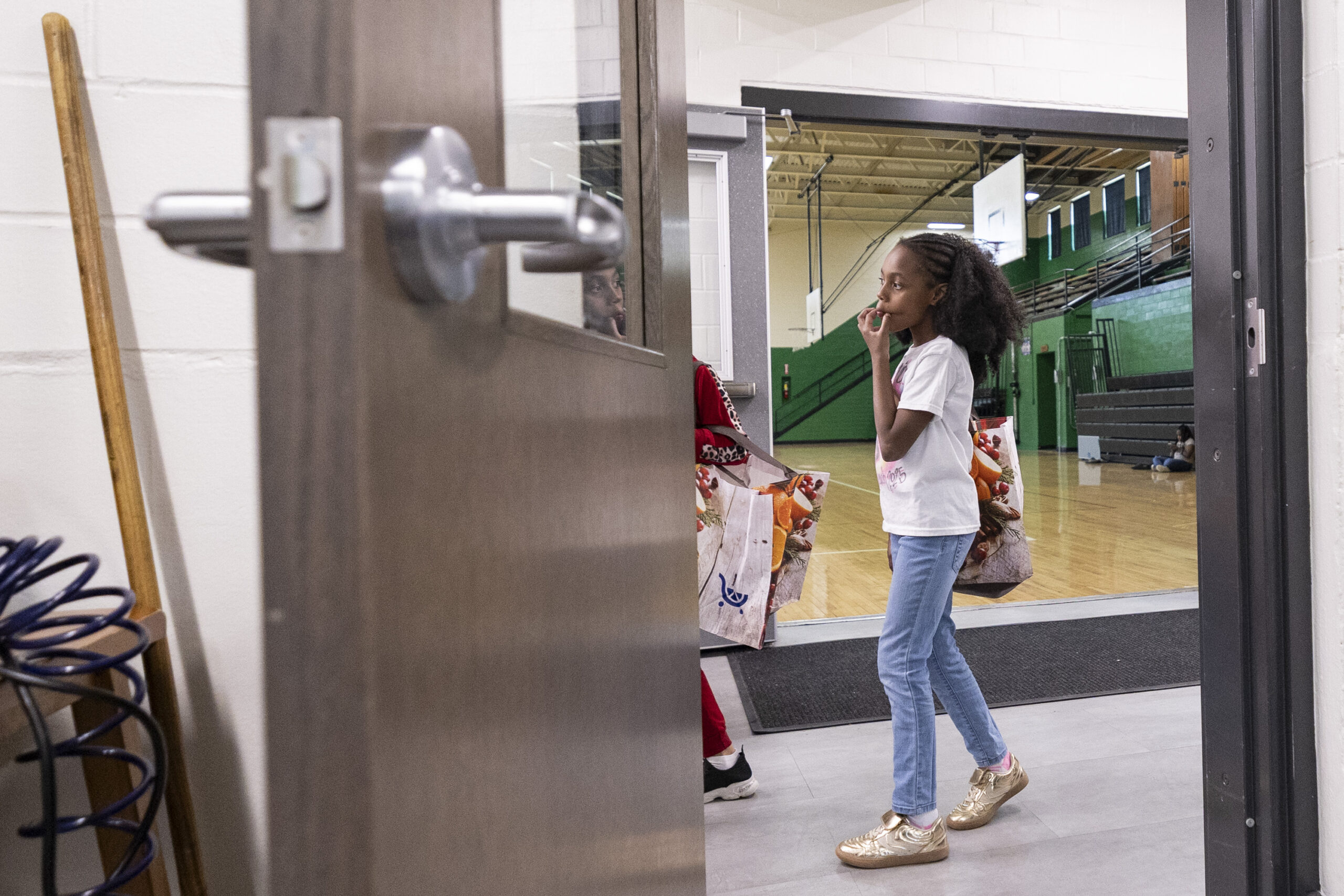 Young students attend the “Hunger Doesn’t Take a Spring Break” initiative which provides free meals and activities to children during school breaks between Apr. 6-10, 2026 taking place in Dunbar Community Center Lexington, Ky. Photo by Peyton Tindall/The Watchdog
The additional collaboration between community partners has been crucial, according to Dana Stephens, a volunteer with the FoodChain non-profit who assisted at the Coolavin Park location.
Dixon said it can be difficult for low-income families or parents without much additional help to find the extra money to take their children on trips or activities throughout break.
Programs similar to Hunger Doesn’t Take a Spring Break, Dixon said, give children an opportunity to play outside and burn energy, keeping them entertained while out of school.
Dixon said some families simply do not have enough resources to stretch across the entire month, so it is not only the food accessibility that helps low-income families, but also the program’s recreational opportunities.
During the first year, Stephens said they had initially made handwritten signs to spread information about the program, and that through more collaboration among the community, they were able to get the word out to a larger audience.
Stephens said the need for a food program such as Hunger Doesn’t Take a Spring Break was validated by the amount of people who attended and gained traction across Lexington.
“It’s really cool to see over the years that it’s true, this is a need,” Stephens said. “Now, look at everybody coming together to support kids.”
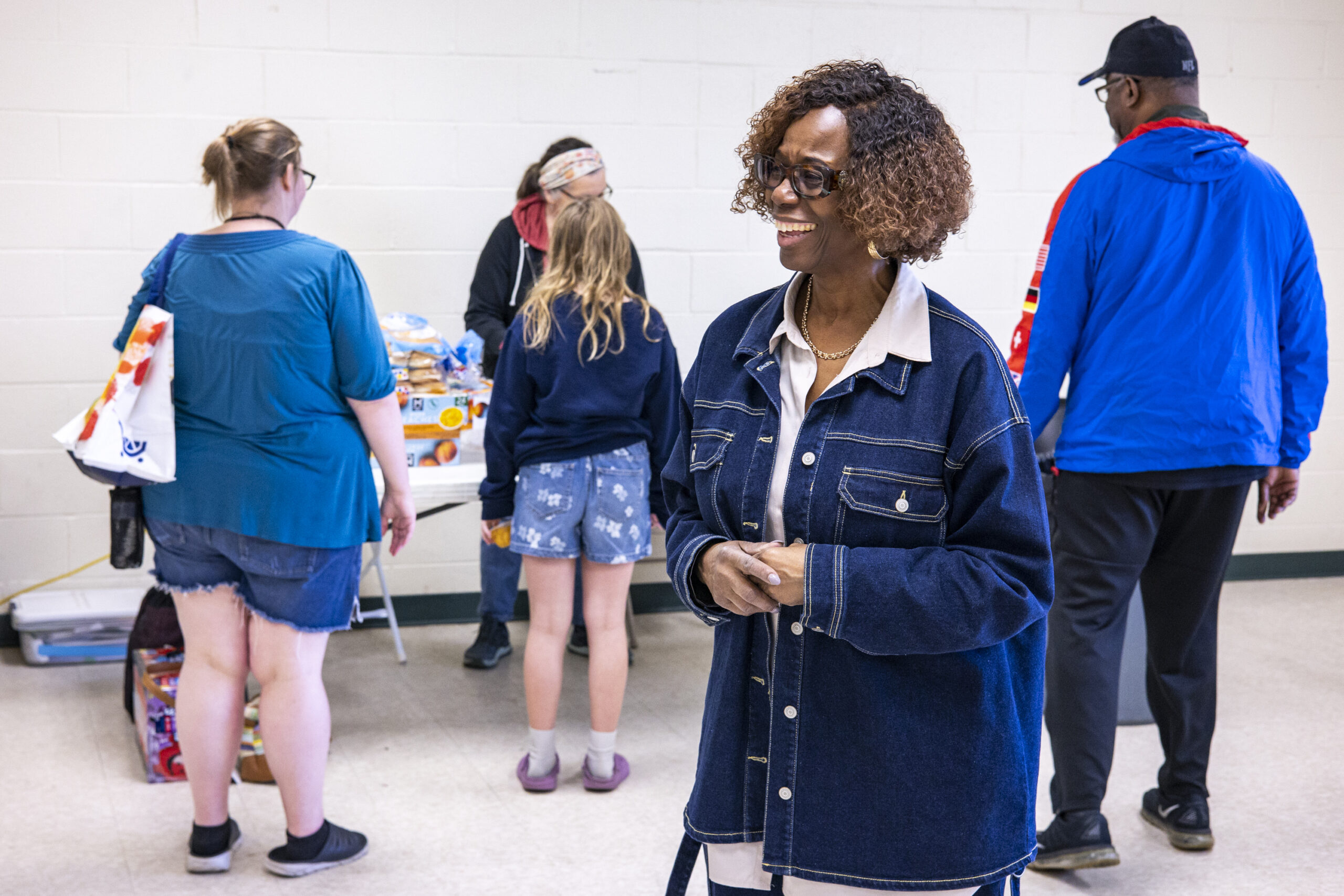 Mary Jones, right center, smiles while talking with different volunteer who came during “Hunger Doesn’t Take a Spring Break” at Coolavin Park in Lexington, Kentucky, on Wednesday, April 8, 2026. Christian Kantosky/The Watchdog
President of the Smithtown Neighborhood Association and volunteer, Mary Jones, said volunteering for Hunger Doesn’t Take a Spring Break is a way for her to give back to her community.
In her childhood, Jones said she benefitted from programs like Hunger Doesn’t Take a spring break namely through a local YMCA.
“What was provided to us, we will want to be able to provide that for others,” Jones said.
Volunteering is essential, according to Jones, who said it helps people be more in touch with issues facing their community, opposed to “turning a blind eye.”
By the end of the program, Morton said three locations “maxed out,” having given out all 100 meals each center had stocked for each day.
Other locations ranged from 30 to 60 children attending each day on average, with all leftover food being taken to other food distribution resources or “maxed out” locations.
Morton said he also planned to work with his district’s elementary schools’ family resources offices to ensure students within those schools have access to snacks for whoever may need it.
“Pretty much all of the excess snacks and meals are going to go to serving the same exact mission of what the program looked to do during the spring break,” Morton said.
While Hunger Doesn’t Take a Spring Break helps provide necessary resources to Lexington’s 1st District, Morton said long-term challenges of economic stability must also be addressed.
People continue to deal with challenges relating to what Morton called their “social determinants of health,” which include economic ability, quality of education and the social context of a community.
All determinants must be addressed, Morton said, in order to improve communities and the livelihoods of those living in the area.
“This one little effort is looking to address that hunger piece, which is 100% important,” Morton said, “but how can we actually build safer and healthy communities? Then, maybe that resource won’t be needed as much, in longer term, I would say.”
Leave a Reply