
 Attendees walk past the Old Fayetteville County Courthouse during Kentucky AIDS Walk at Main Street in Lexington, Kentucky, on Sunday, May 17, 2026. Christian Kantosky/The Watchdog
HIV and AIDS survivors walked through downtown Lexington and shared their experiences of being diagnosed with the diseases during the annual Kentucky AIDS Walk.
The fundraiser, hosted by Avol, took place on Sunday, May 17, at the Fifth Third Pavilion at Henry A. Tandy Centennial Park, raising a record $53,644 for charitable work, such as testing equipment and outreach programs.
Jonathan Hall, the community engagement manager for Avol, said the AIDS walk is an important fundraising event, since the group relies on donations to continue providing housing for those with AIDS as well as free HIV testing for the community.
“We wanted to make it (the fundraiser) even bigger this year,” Hall said. “Today is our biggest fundraiser that we’ve had in almost 40 years, so we’re really proud of that.”
The support for Avol and its work has been overwhelming, Hall said, considering the current political climate, as the war against HIV continues.
Federal funding for Avol has been cut, according to Hall, so he and other Avol staff have taken every chance they get to spread awareness about HIV.
“The same thing that happened in the ‘80s is happening now,” Hall said. “We have some funding withdrawals, so the community coming together and matching that and meeting that need, like today, is incredibly special for us.”
According to Hall, Avol works with various nonprofits to bring in experts from other fields related to HIV and AIDS, such as lab technicians and recovery counselors.
 Steve Drayton, center, who has lived with HIV for 38 years, spoke to the crowd during Kentucky AIDS Walk at Main Street in Lexington, Kentucky, on Sunday, May 17, 2026. Christian Kantosky/The Watchdog
There are many different causes that determine how susceptible a person can be to HIV, Hall said, which is why Avol works alongside other nonprofits’ medical professionals to create the highest survival chances for those who test positive.
“As a community organization, we understand it takes a village,” Hall said. “HIV doesn’t exist in a bubble.”
Bret Shea is a volunteer for Avol who has been HIV positive for 13 years. He joined the organization in 2025 after reaching two years of alcoholic sobriety.
“As part of getting sober,” Shea said, “I feel like I need to support my community more and give back, and this is the best way to do it.”
Shea said he was touched by the amount of people supporting the event, especially under the Trump administration.
“To see so many people come out and show support when there’s so much against us right now, it just brightens my heart,” he said. “It’s perfect.”
During the event, some survivors gave speeches, including Steve Drayton, who has lived with HIV for 38 years.
Drayton said he has shared how he has his struggle after being diagnosed with HIV, and feels as if he is “too outspoken about it.”
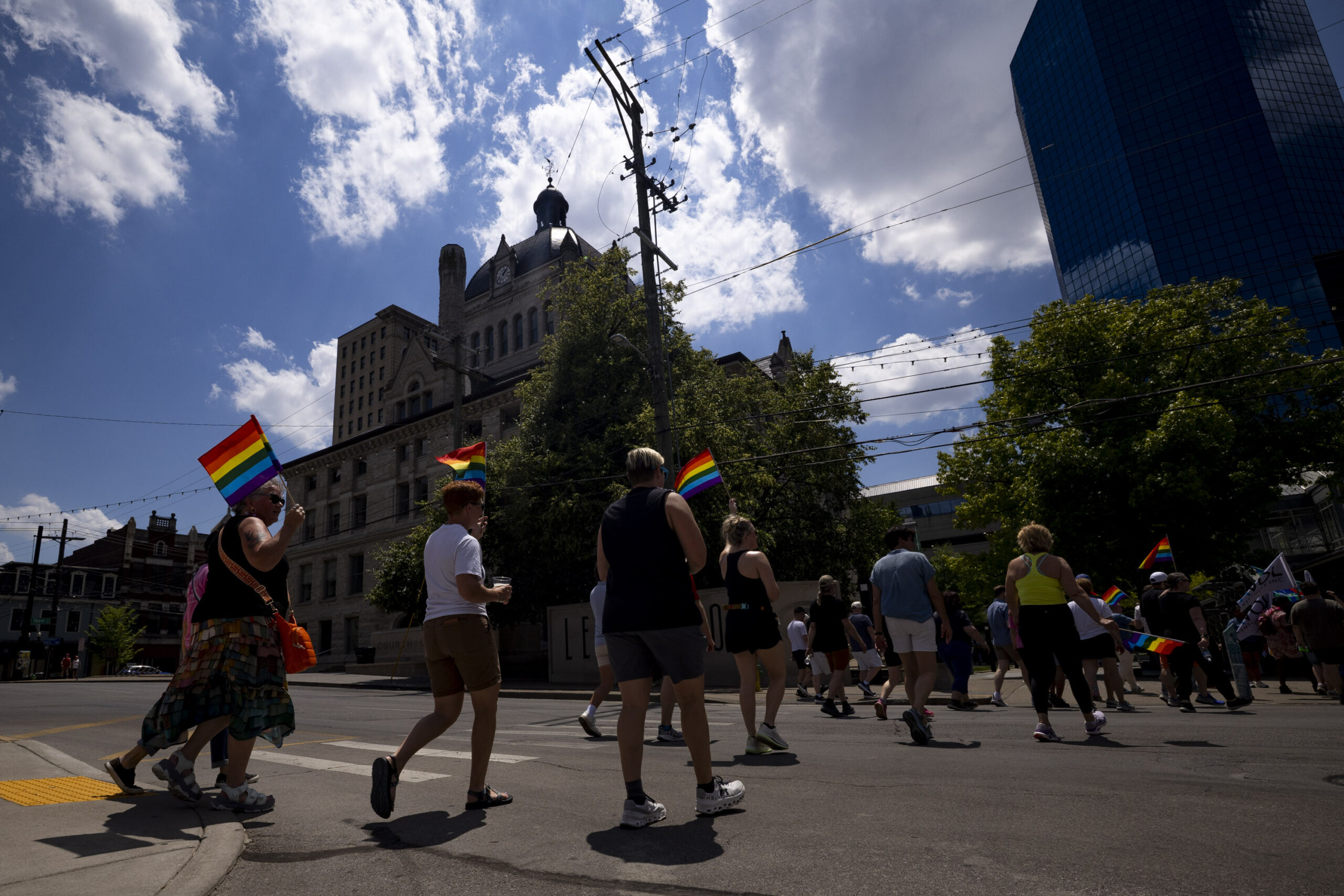 Attendees walk past the Old Fayetteville County Courthouse during Kentucky AIDS Walk at Main Street in Lexington, Kentucky, on Sunday, May 17, 2026. Christian Kantosky/The Watchdog
Getting diagnosed with AIDS or HIV in the 1980s was a “death sentence,” both medically and socially, Drayton said – the stigma around the AIDS epidemic in the ‘80s and ‘90s made him believe he would not live past 40.
Drayton said his T cell count was at 16 while the average count is 300 to 500 billion. HIV can cause a decrease in T cells, which weakens one’s immune system and makes those with HIV and AIDS catch other illnesses easier, according to Cleveland Clinic.
According to Drayton, he had to take six times the standard dose of azidothymidine, or AZT, a prescription medicine to fight HIV and AIDS.
“I started getting infections that children get. I remember the day after my diagnosis, the sun was shining on me, it was a beautiful day,” Drayton said. “I said, ‘I’m not going to give up, I’m not going down easy. This is not how I want to go out.’”
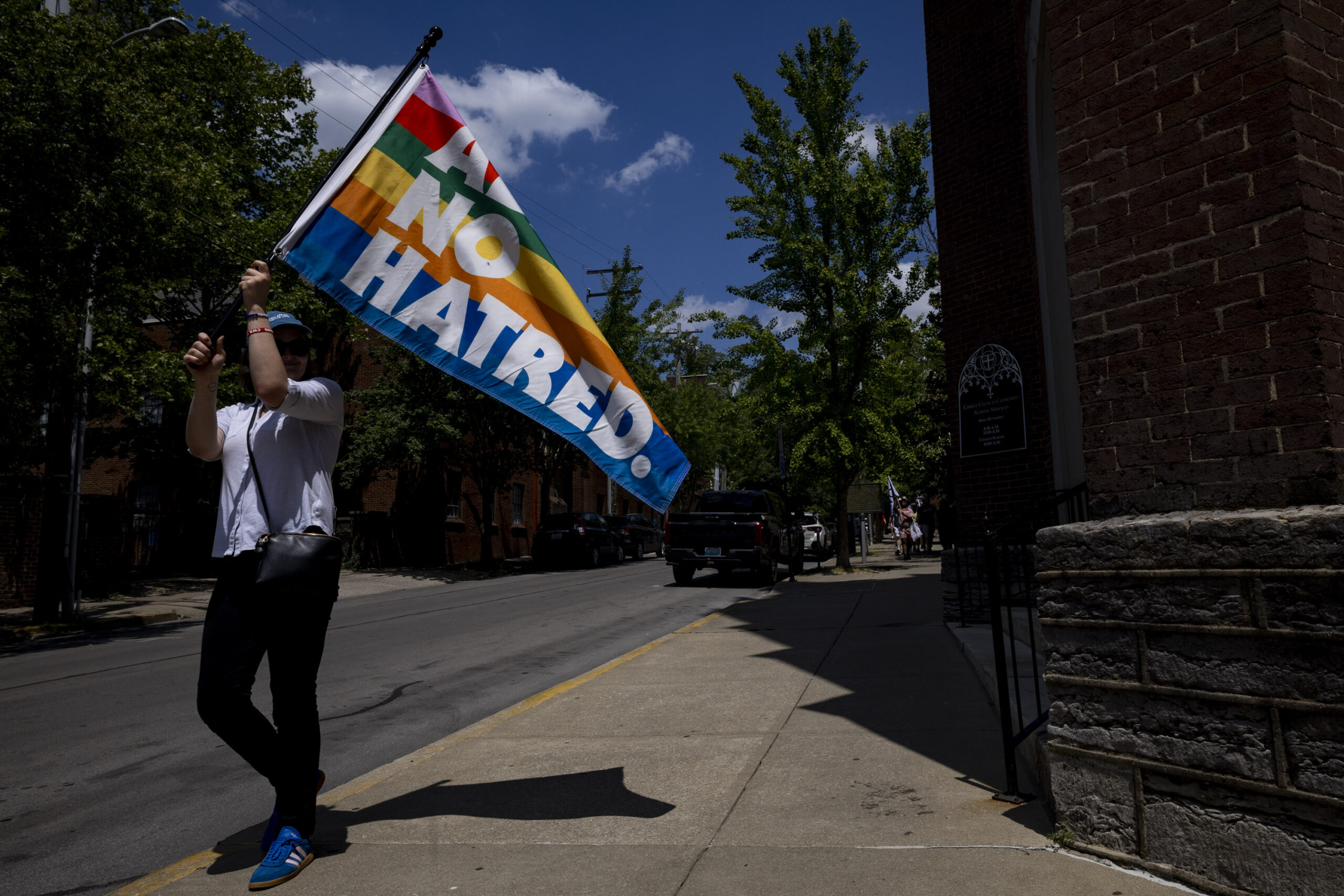 Lexington City Councilwoman Emma Curtis waves a flag during Kentucky AIDS Walk at Main Street in Lexington, Kentucky, on Sunday, May 17, 2026. Peyton Tindall/The Watchdog
In his speech before the walk, Drayton talked about the state of LGBTQ+ hate, mentioning the shutdown of AIDS walks across the United States.
“The Philadelphia AIDS Walk shut down after 38 years. It raised $18 million, and yet this one in Lexington is growing,” Drayton said. “It shows Kentuckians genuinely care about each other. That’s why me and my husband moved here.”
Alicia Brummett, an HIV survivor, said she felt called to speak out against the stigma and advocate for those diagnosed with HIV and AIDS.
“I’m grateful that I found out early and it’s been my goal to speak out about it because I was scared,” Brummett said. “I’ve never been so scared in my life.”
Brummett said she was previously homeless and had ongoing issues with addiction until she decided to receive treatment. After three weeks of treatment, she was diagnosed as HIV positive.
“I don’t have a bad story, my family accepted it. Of course they were scared, but they were educated,” Brummett said. “I was not educated, so from the beginning, I started asking all the questions, and I realized that I thought I was looking death in the face, but it gave me my will to live.”
After Drayton’s speech, Brummett said she gave him words of encouragement and embraced him as not only a survivor, but as a person.
“People here still have HIV today and aren’t that educated about it, and they still look at it as a death sentence,” Brumett said. “Because people fought so hard then, we don’t have to die today.”
Leave a Reply