
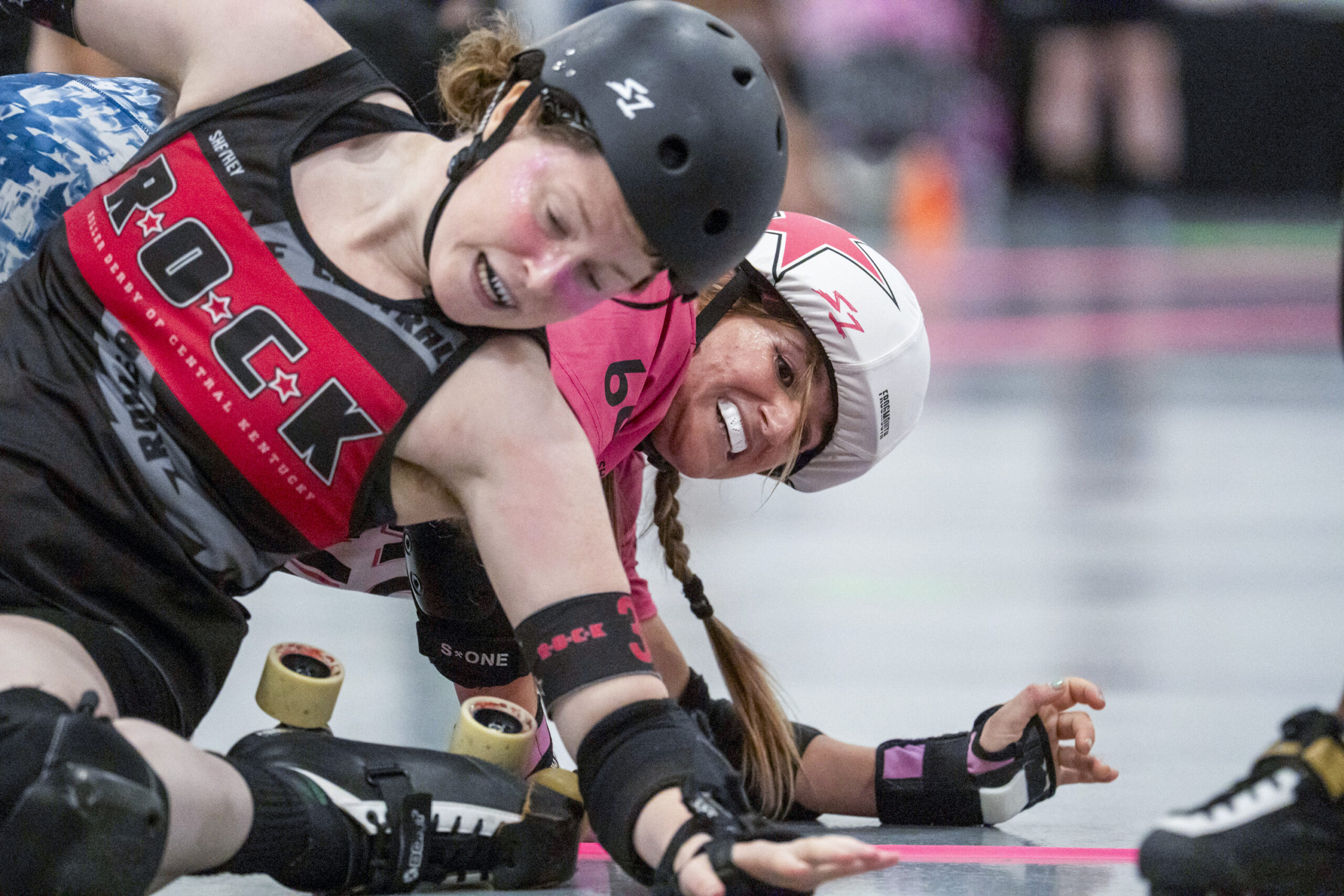
 ROCK skaters practice during a bout at Central Bank Center in Lexington, Kentucky, on Saturday, Aug. 8, 2026. Peyton Tindall/The Watchdog
The crowd cheers as the skaters line up for the opening bout.
A mix of anticipation and anxiety surges through No. 98 Hurricane as she readies herself to break through the opposition’s wall.
Seconds later, a whistle pierces the air.
She launches forward, focusing on the momentum of the skate.
“As soon as the whistle blows for the first jam, I typically black out,” Hannah Spahn, head of Public Relations for Roller Derby of Central Kentucky and #98 Hurricane, said. “You know, I have no idea what I’ve done.”
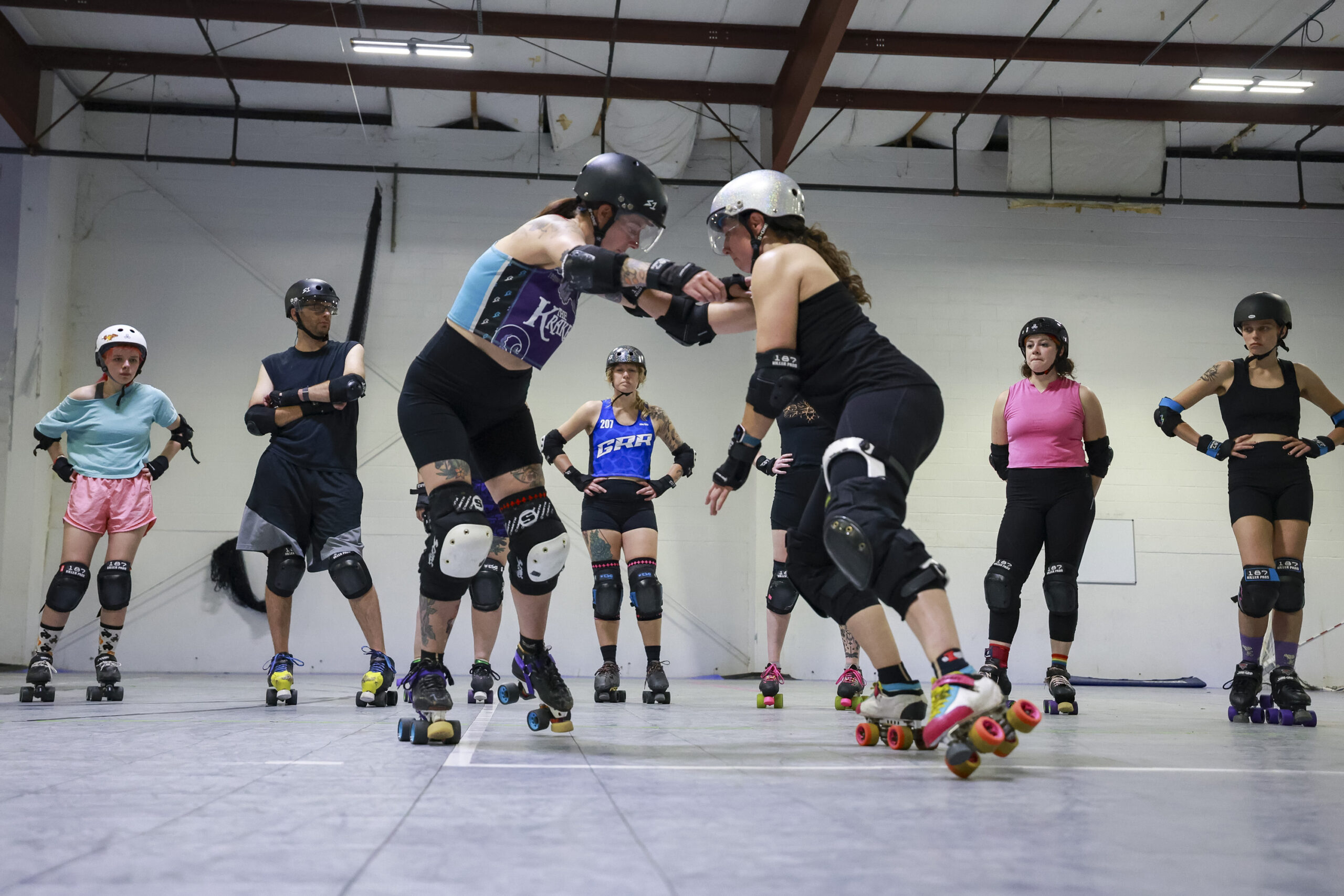 Skaters with ROCK watch their teammates demonstrate a drill during practice at The Yard in Lexington, Kentucky, on Wednesday, Oct. 7, 2026. Christian Kantosky/The Watchdog
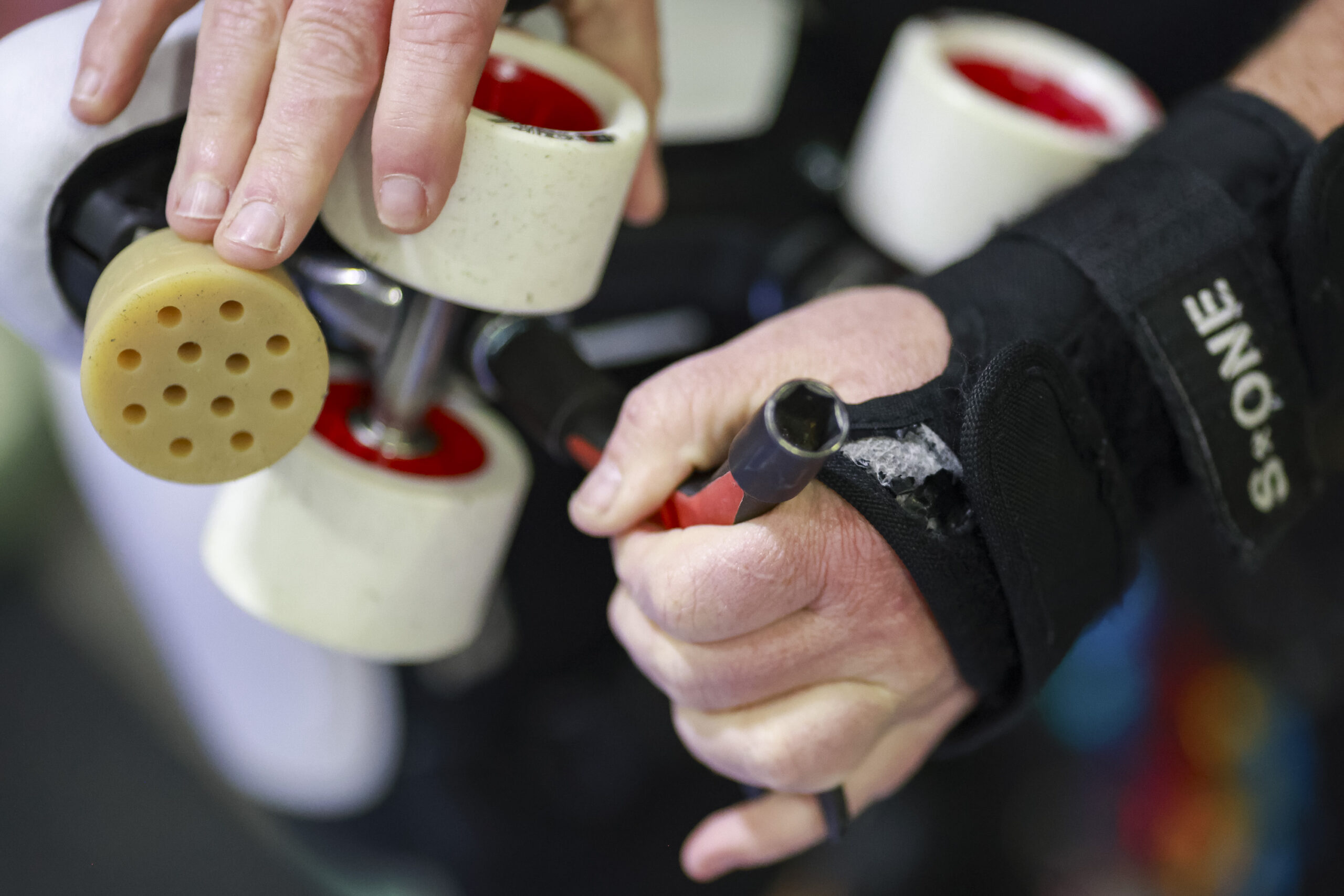 A skater laces their skates during practice at The Yard in Lexington, Kentucky, on Wednesday, Oct. 7, 2026. Christian Kantosky/The Watchdog
‘A really long way’
ROCK, Lexington’s premier flat track roller derby league, was founded in 2006, according to its website. The nonprofit promotes inclusivity in skating, with all genders participating in practices and women and non-binary skaters allowed at sanctioned bouts.
For several seasons after they officially began, ROCK coach and co-founder Joseph Manley said the team had only seven skaters.
“Now we have two full competitive teams, both ranked in the WFDA standings, and other people who are working toward making those teams,” Manley said. “We’ve come a really long way.”
Players would often cycle through ROCK before he said they would move on to bigger, more competitive teams.
As a coach, Manley said it has been an exciting 20 years watching his team go from the “furthest from competitive” to an internationally competitive team, and he cannot see where the team goes in the future.
“I hope to continue with it as long as they’ll have me,” Manley said.
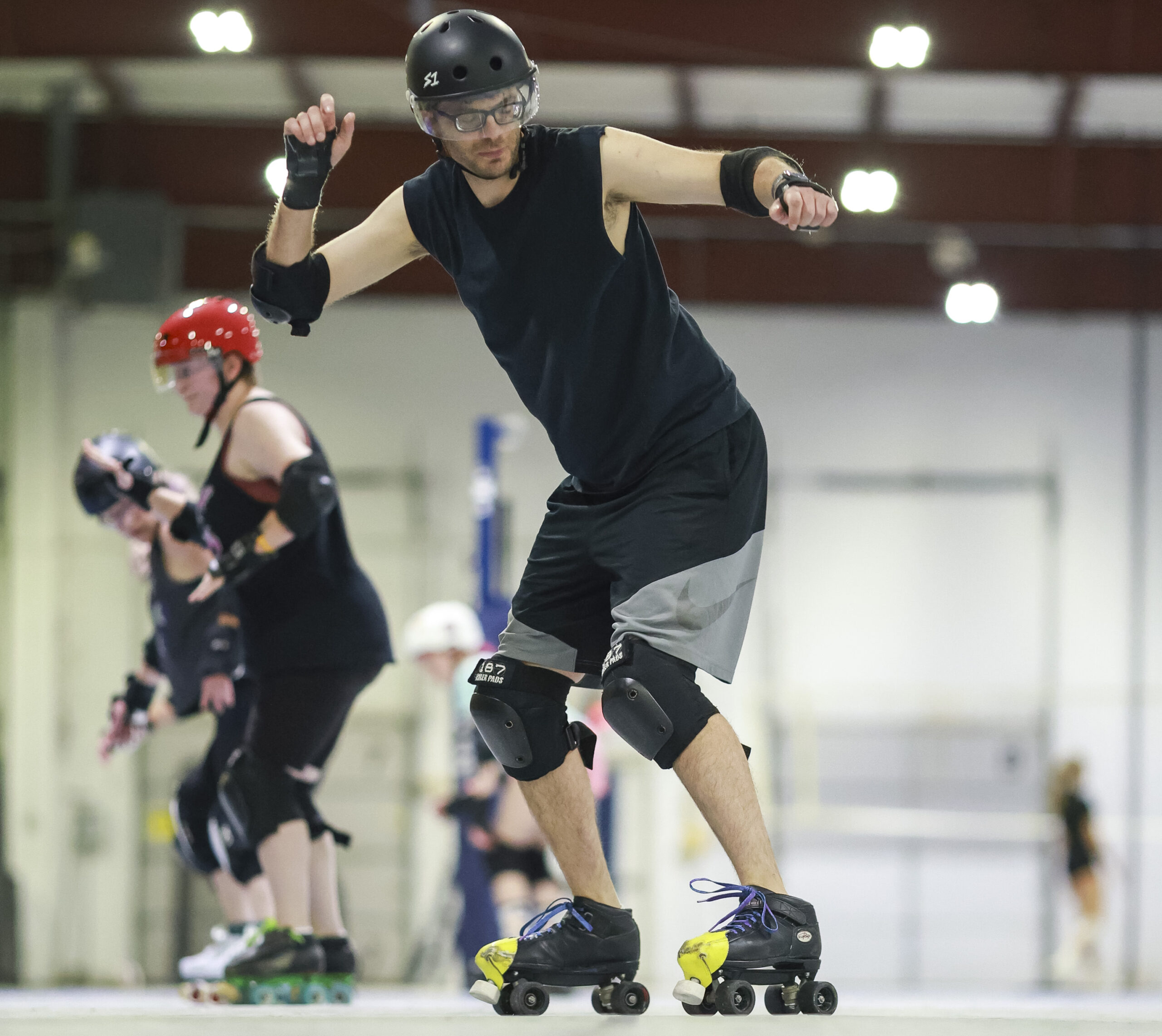 Kyle Albert practices skating drills at The Yard in Lexington, Kentucky, on Wednesday, Oct. 7, 2026. Christian Kantosky/The Watchdog
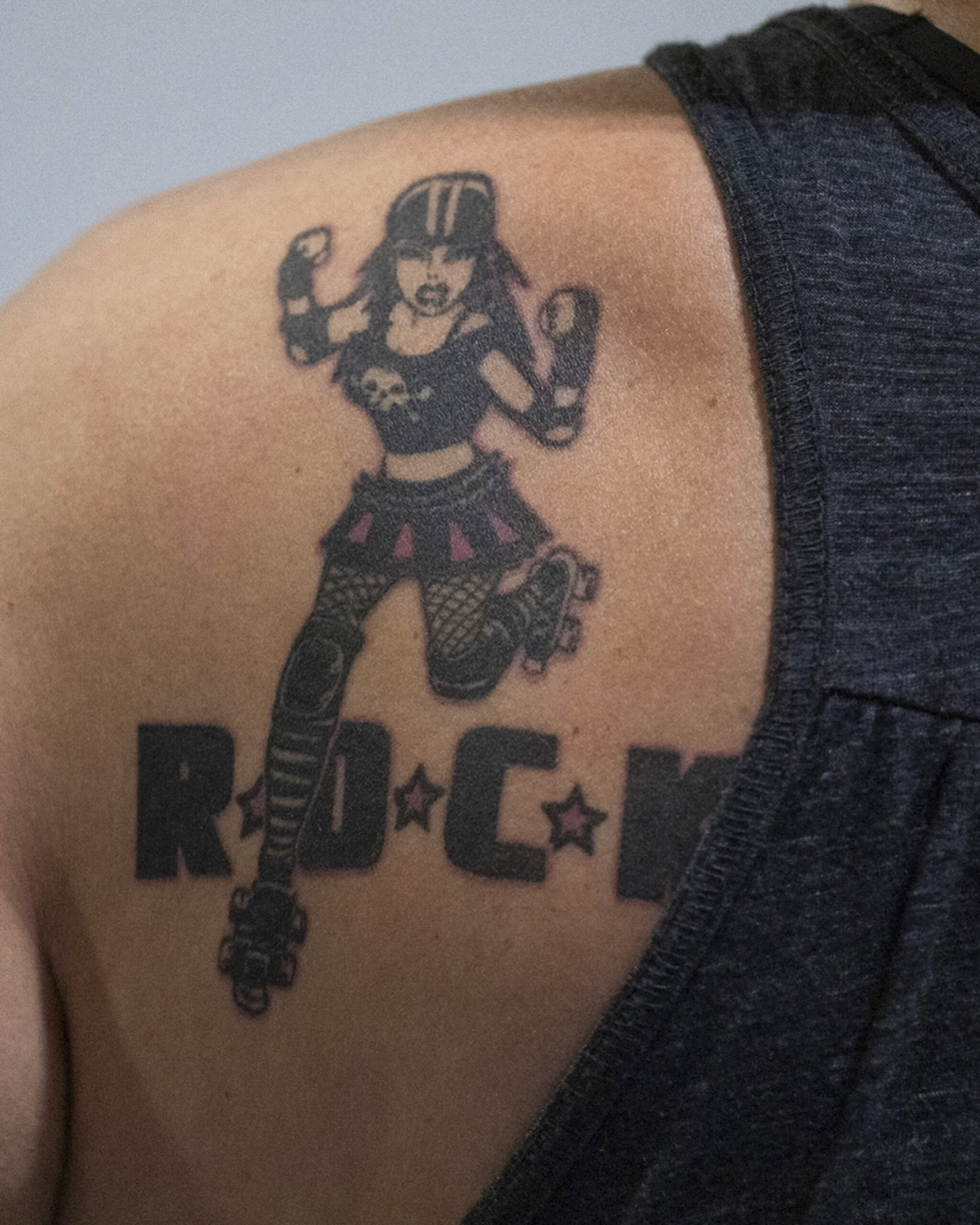 Nicole Begg’s shoulder at The Yard in Lexington, Kentucky, on Wednesday, Aug. 5, 2026. Peyton Tindall/The Watchdog
‘The most challenging thing I have ever done’
Each bout consists of several smaller games, called jams, Spahn said.
A jam is a two-minute session where the team’s jammer tries to break through a wall of the opposing team’s players, according to Spahn.
This creates a game where the team plays both offense and defense, she said, as they try to help their jammer break through the wall while simultaneously blocking the other team’s jammer.
“It’s a high-intensity game,” Spahn said. “So it’s a lot of endurance and a lot of strength that it takes to play a full game.”
On bout day, the team arrives at around 2 p.m., three hours before the game officially starts.
Spahn said they do everything from setting up tables and chairs to taping the track lines to the floor.
For Spahn, the setup is not just about preparing for the upcoming bout — it is a bonding experience as well.
“We’re spending time together,” Spahn said. “Yes, we’re working, but you get to learn new things about people and see them in a different capacity than just being on roller skates and hitting each other.”
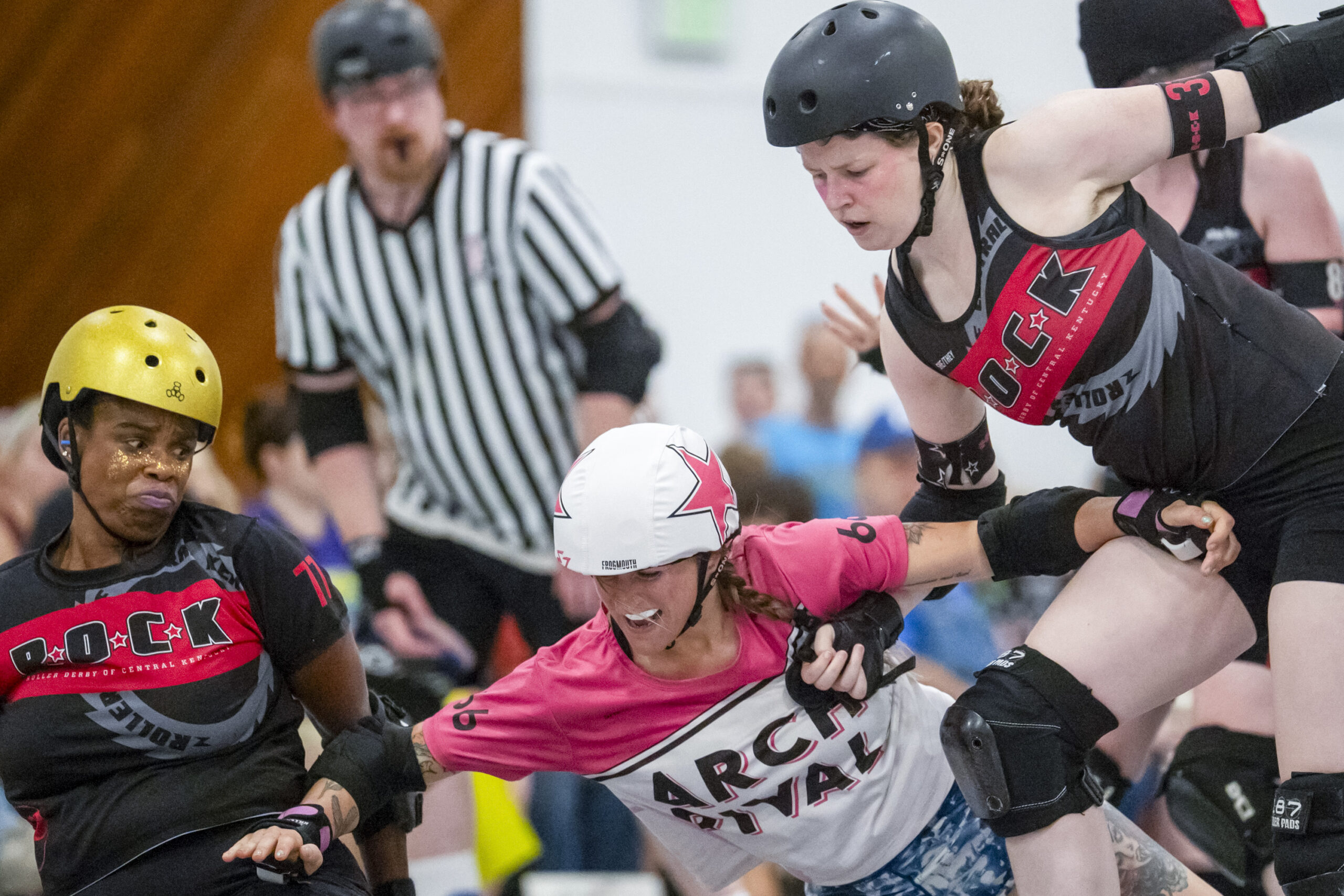 ROCK skaters practice during a bout at Central Bank Center in Lexington, Kentucky, on Saturday, Aug. 8, 2026. Peyton Tindall/The Watchdog
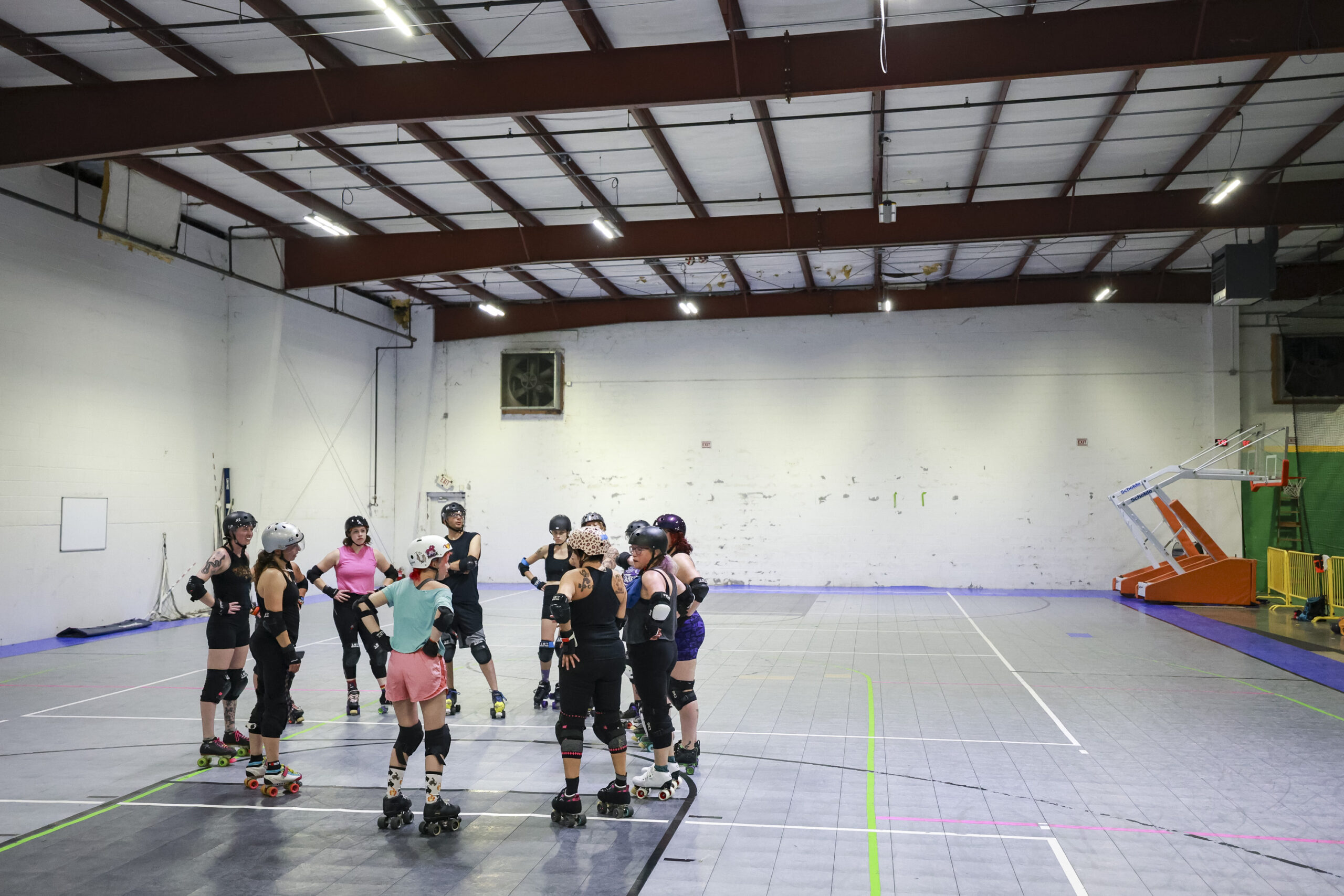 Skaters with ROCK circle up during practice at The Yard in Lexington, Kentucky, on Wednesday, Oct. 7, 2026. Christian Kantosky/The Watchdog
Roller derby was popularized in the 60s and 70s because of the sport’s “sexualized” nature, according to Spahn.
“They (skaters) were throwing each other over the rails and fighting it out in the middle,” Spahn said. “So it was kind of like this fake, played-up, wrestling type of thing.”
While the love for dressing up on bout days has continued through the decades, Spahn also wants to be taken seriously as a sport and not just a performance.
“We are real athletes. It is not theater or pretend,” Scarlett Brock, a skater with ROCK and No. 1858 Scarlett Fever, said. “It is a real game. It is hard. It is the most challenging thing I have ever done physically, and it’s very important that we are taken seriously.”
Growing up in competitive speed skating, Brock said she thought roller derby would be a simple next step.
“I was cocky, thought I knew everything . . . I did not. I was literally a deer in headlights,” she said. “I broke so many bones . . . it’s not easy. No one is born knowing how to do it. Everybody has to work toward those skills.”
Cat Zamarron, ROCK B team captain and No. 829 Catastrophe, said with the sport’s intense nature, it is important to have the mobility, strength and knowledge to participate.
To help new skaters develop those skills, she said they have a program called homeroom, where new skaters can learn the roller derby basics.
“You will find muscles that you did not know existed,” Zamarron said. “You need so much core and stability . . . it will work out parts of your body that you did not know you needed to work out.”
According to Zamarron, roller derby has not only empowered her but also allowed her to watch other players grow as both athletes and people.
“I watch some of our newer skaters that come in and are so meek and quiet and not believing in themselves just blossom as they become these other people here,” Zamarron said.
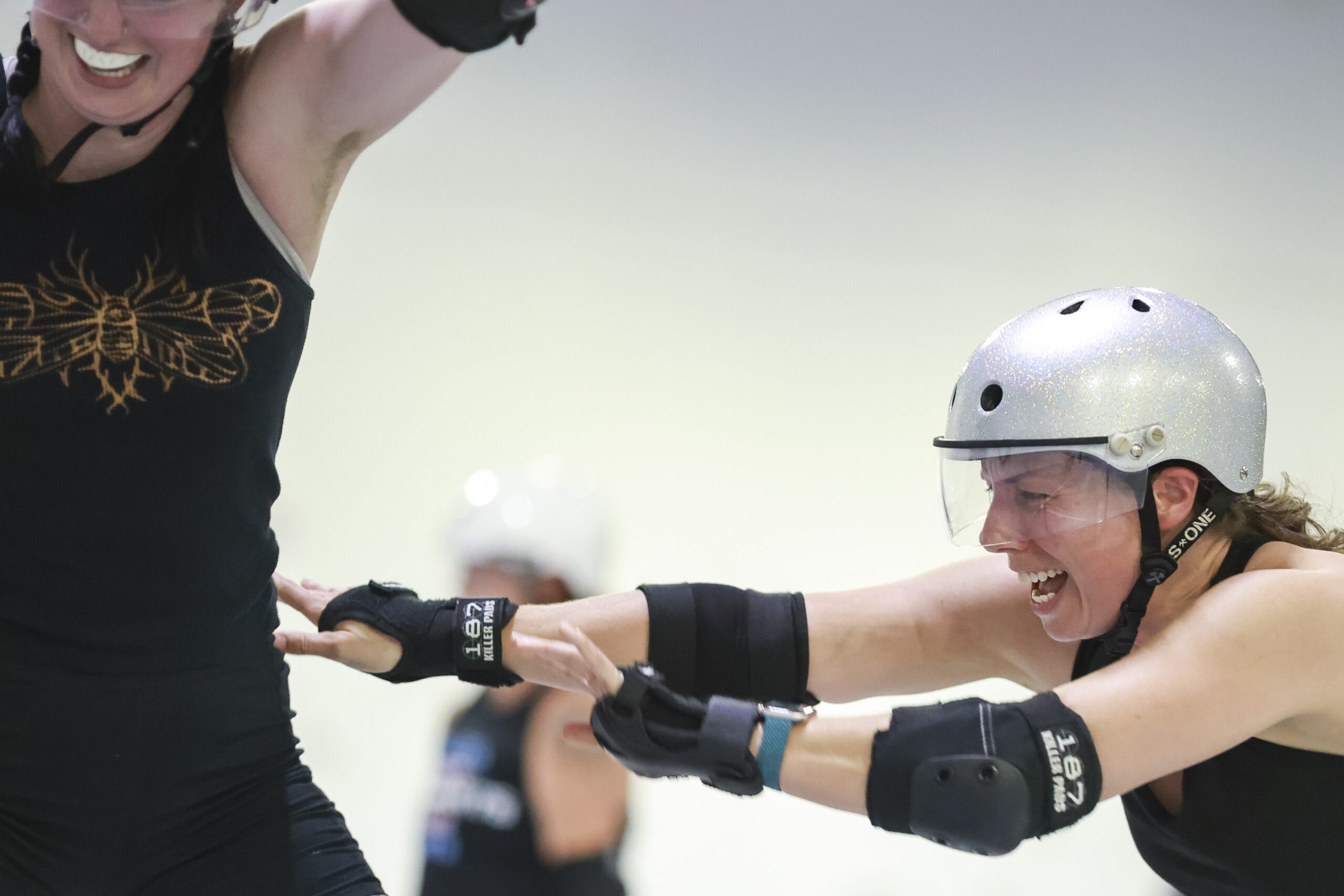 Hannah Spahn practices skating drills with teammates at The Yard in Lexington, Kentucky, on Wednesday, Oct. 7, 2026. Christian Kantosky/The Watchdog
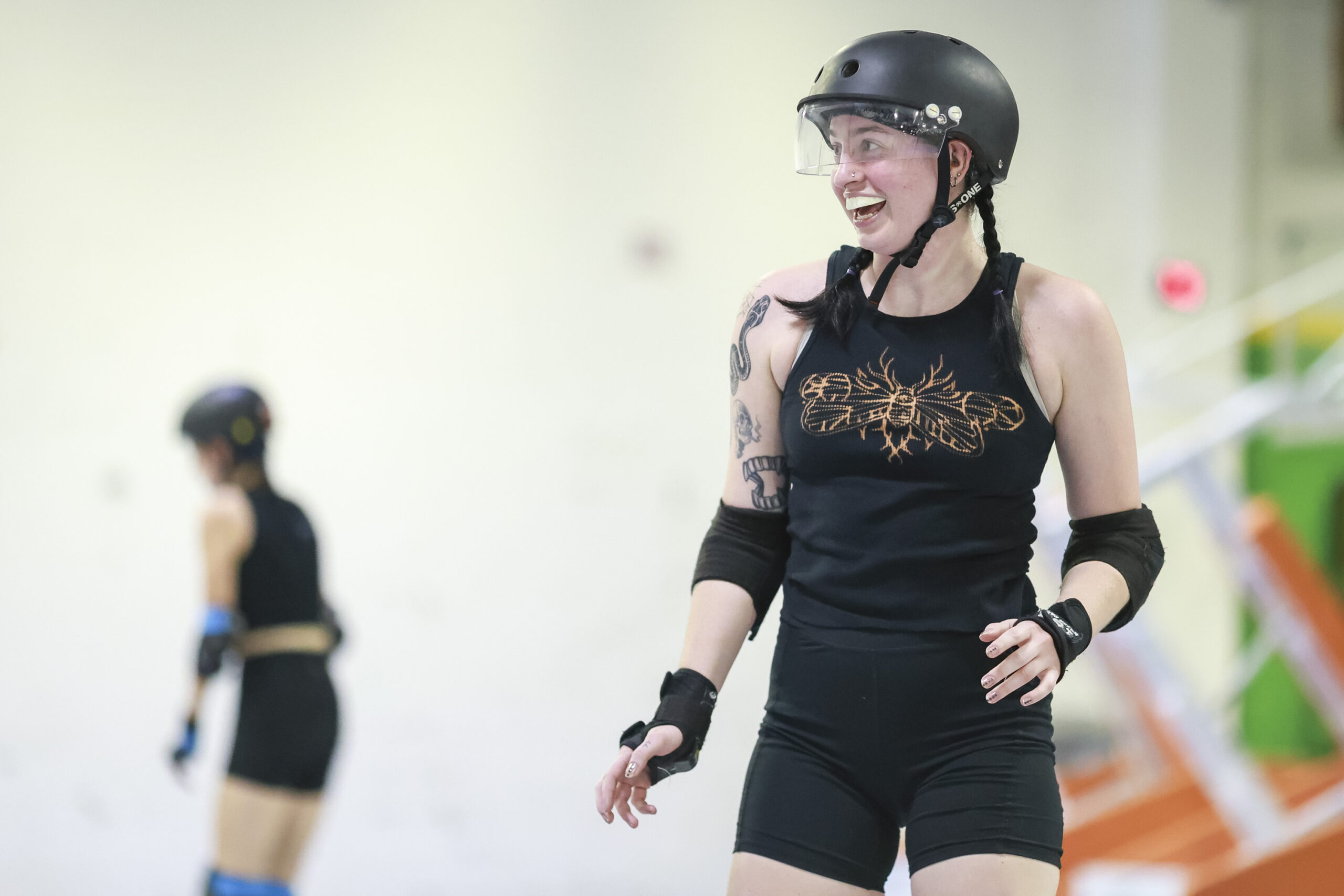 Hannah Spahn practices skating drills with teammates at The Yard in Lexington, Kentucky, on Wednesday, Oct. 7, 2026. Christian Kantosky/The Watchdog
‘A spot for everyone’
As a sport, roller derby has had a history of being a safe space for queer athletes and inviting them into rooms where they were often told they did not belong, according to Zamarron.
With the creation of their roller derby names, she said players could give themselves an “alter identity” once they put on skates.
“You can embrace identities that you maybe don’t get to embrace in your everyday life,” Zammaron said.
That inclusivity is something ROCK prioritizes in everything they do.
“There aren’t a lot of sports that prioritize not-cisgender men,” Zammaron said. “I think creating a space for that is one of the things I love the most about roller derby.”
Growing up, Zammaron often heard messages of what girls supposedly couldn’t do: “Girls don’t play that. That’s not a sport for girls,” or, “Don’t lift weights. That’ll make you too bulky.”
Even as a new generation of women grows up without that message, she hopes roller derby sends a message to women everywhere that they can be muscular and athletic.
“There are more things for women to do than Pilates bodies and yoga, and I really like that we create this space for strength,” Zammaron said.
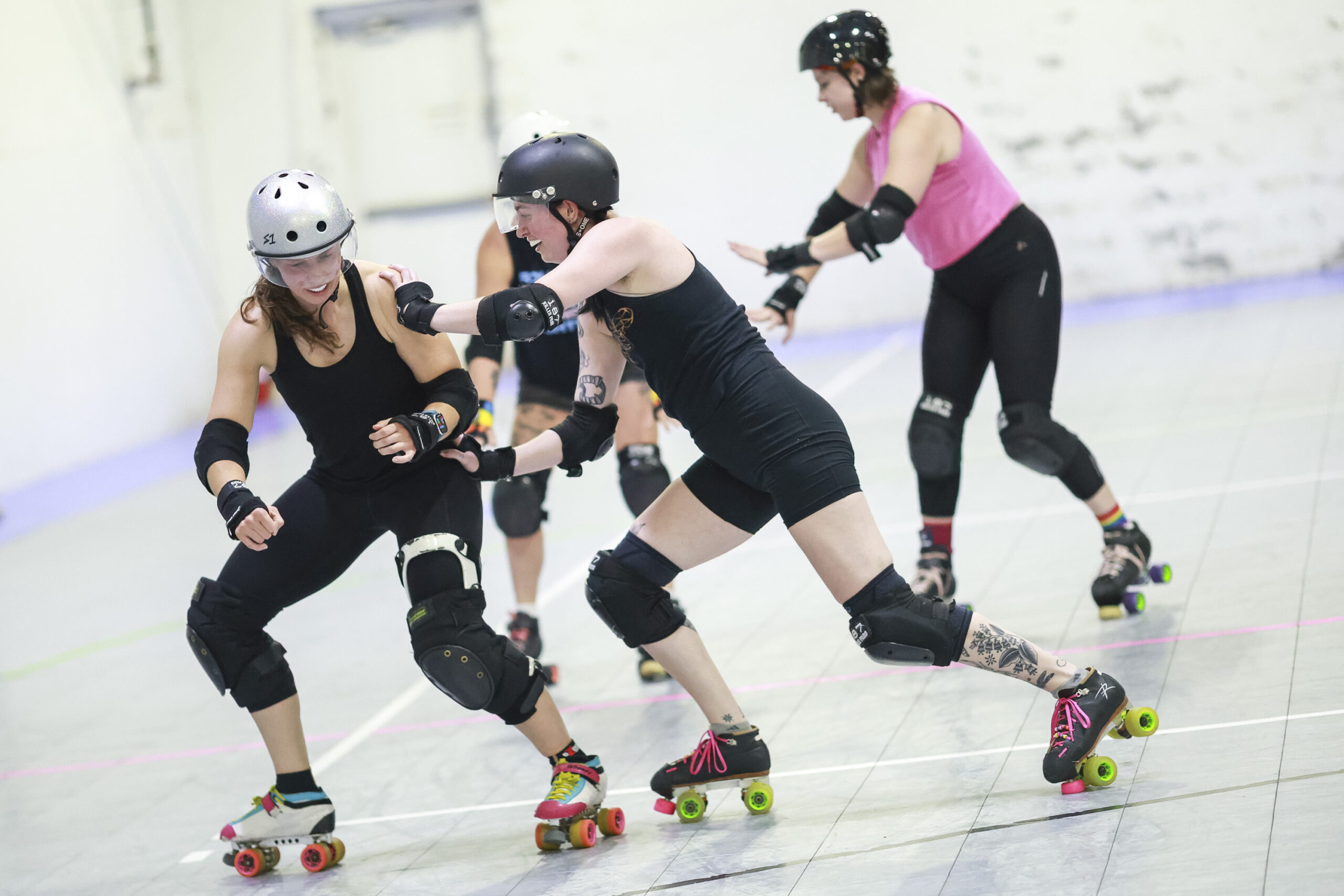 Hannah Spahn, right, practices skating drills with teammates at The Yard in Lexington, Kentucky, on Wednesday, Oct. 7, 2026. Christian Kantosky/The Watchdog
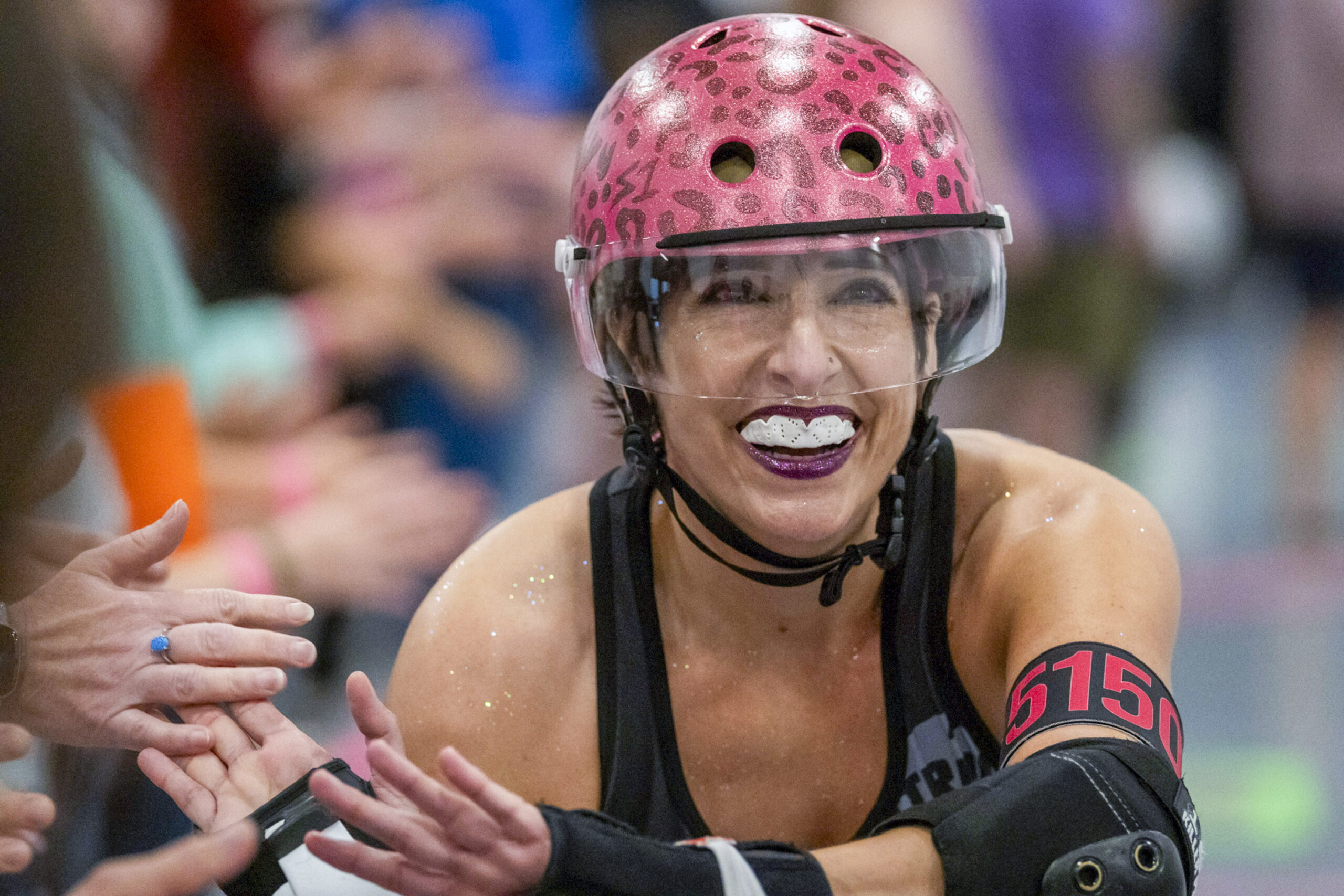 Nicole Begg receives high-fives from the crowd at Central Bank Center in Lexington, Kentucky, on Saturday, Aug. 8, 2026. Peyton Tindall/The Watchdog
Nicole Begg, No. 5150 Fifty Shades of Cray, said the sport celebrates all kinds of different skills.
“You could be big and strong and a larger body, and you’re really good at blocking. You could be really small and agile and fast, and you get around people quickly,” Begg said. “There’s kind of a spot for everyone.”
Begg started skating 11 years ago, at age 43. Now 54, she is the oldest on the team.
While athletes in most sports hit their prime in their 20s and often retire before 50, she said that is not the case in roller derby.
“One of the first things that I tell people is my age, and they’re really surprised at that,” Begg said. “The majority of players tend to be middle-aged. Even some of the top world skaters — a lot of them are in their 30s.”
After finding confidence and community through the sport, Begg said its openness is one of its defining strengths.
“People ask, ‘What is it about derby you love so much?’” Begg said. “Inclusivity is a huge part of it. I think that everybody should have a space to play sports.”
Leave a Reply