
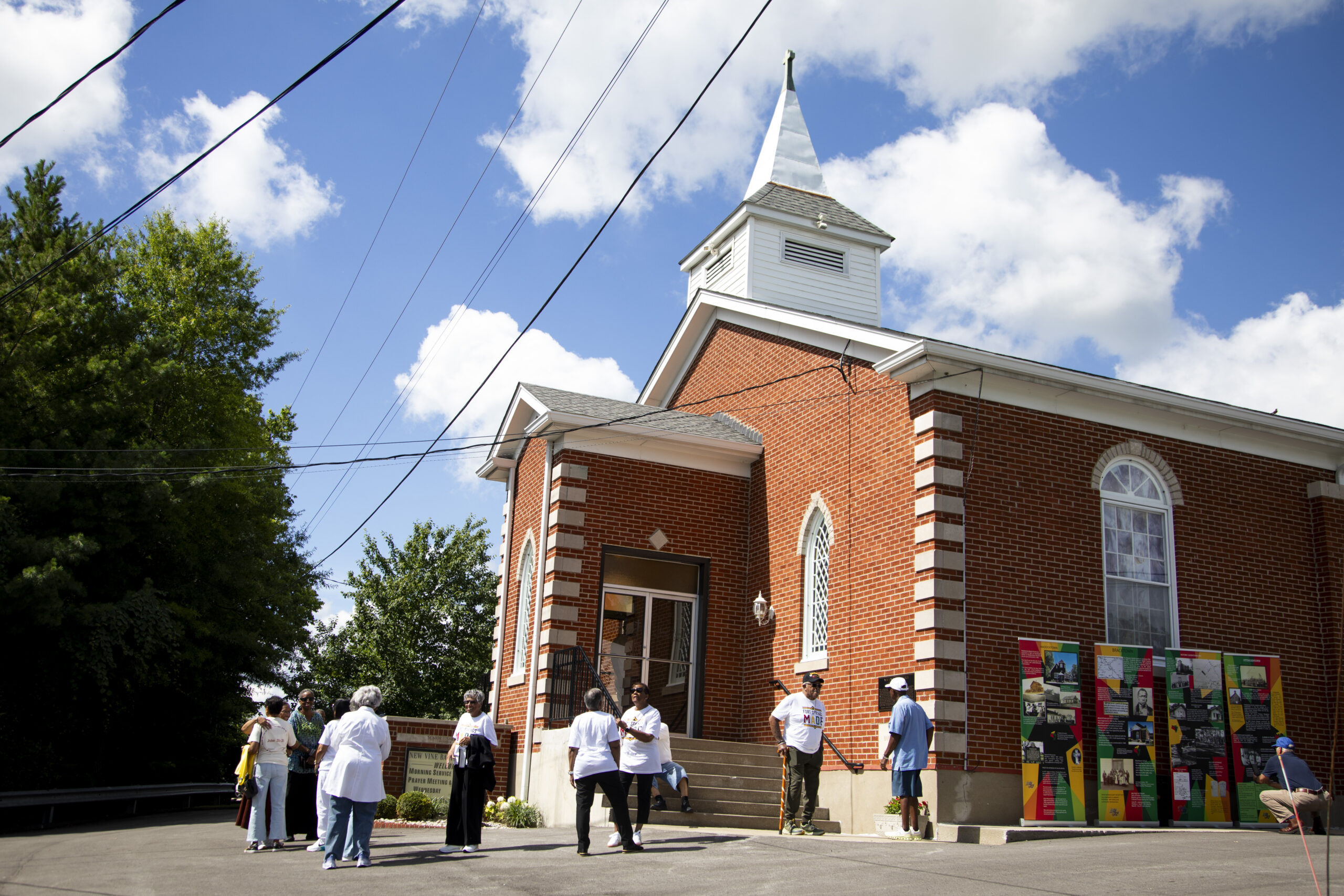
 Fort Spring community members gather for Juneteenth Celebration at New Vine Baptist Church in Lexington, Kentucky, on Friday, June 19, 2026. Isabella Sepahban/The Watchdog
Fort Spring, a Black hamlet founded 200 years ago, welcomed people to explore the historic campus and connect with community members during their Juneteenth Celebration.
Hosted on Friday, June 19, by New Vine Baptist Church and A Sense of Place, an organization that honors Black hamlets founded in Lexington during the 1800s, the Juneteenth Celebration featured a church service and guided walking tour through the old hamlet structures.
Former Lexington Councilmember Kathy Plomin said the Lexington-Fayette Urban County Government established A Sense of Place in 2022 as a way to preserve Black hamlets and bring attention to the areas.
When Emancipation took place, Plomin said, enslaved people from nearby farms created hamlets similar to Fort Spring. A Sense of Place defines a hamlet as a small, rural settlement developed by Black people between the 1800s and the 1920s.
“What we were trying to do, or the intent, was to recognize and celebrate these historic hamlets that played such an important role in the evolution of Lexington,” Plomin said.
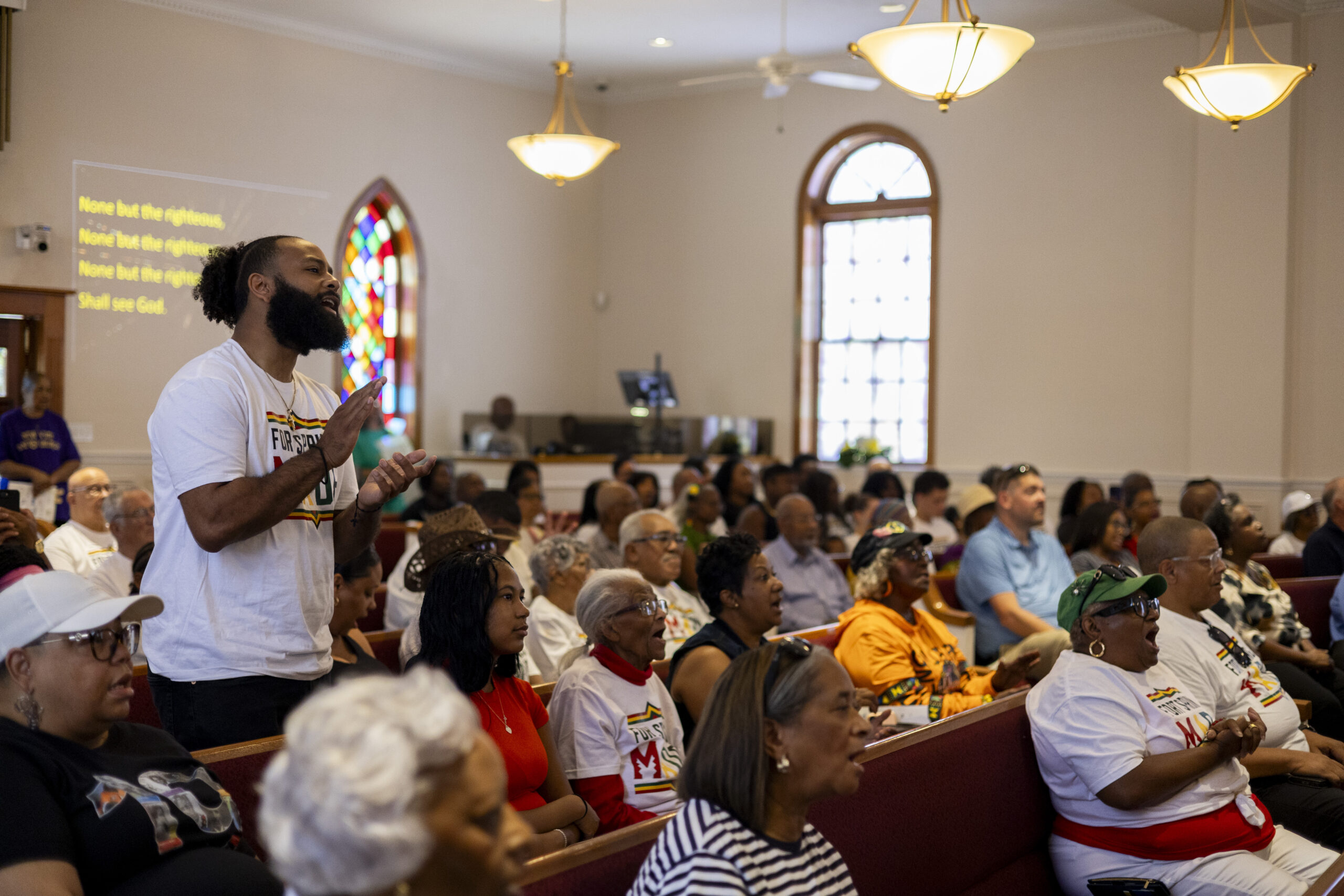 Clifton Jackson sings along to gospel songs during Juneteenth Celebration at New Vine Baptist Church in Lexington, Kentucky, on Friday, June 19, 2026.
Rev. Stewart Peoples, who has served as New Vine’s pastor for 25 years, said the church is the center of the community, and believes they are celebrating Juneteenth in a special way.
“Here at Fort Spring, New Vine Baptist Church has been alive for 152 years, and there’s so many stories and so much legacy here,” Peoples said. “We’re just celebrating who we are and how we’ve come through so much, through so many different years and presidents and eras.”
Fort Spring, originally known as Reform and later Slickaway, was founded in 1826 after the land was bought by Henry Clark, a freed slave in the area, according to a historical presentation given during the church service.
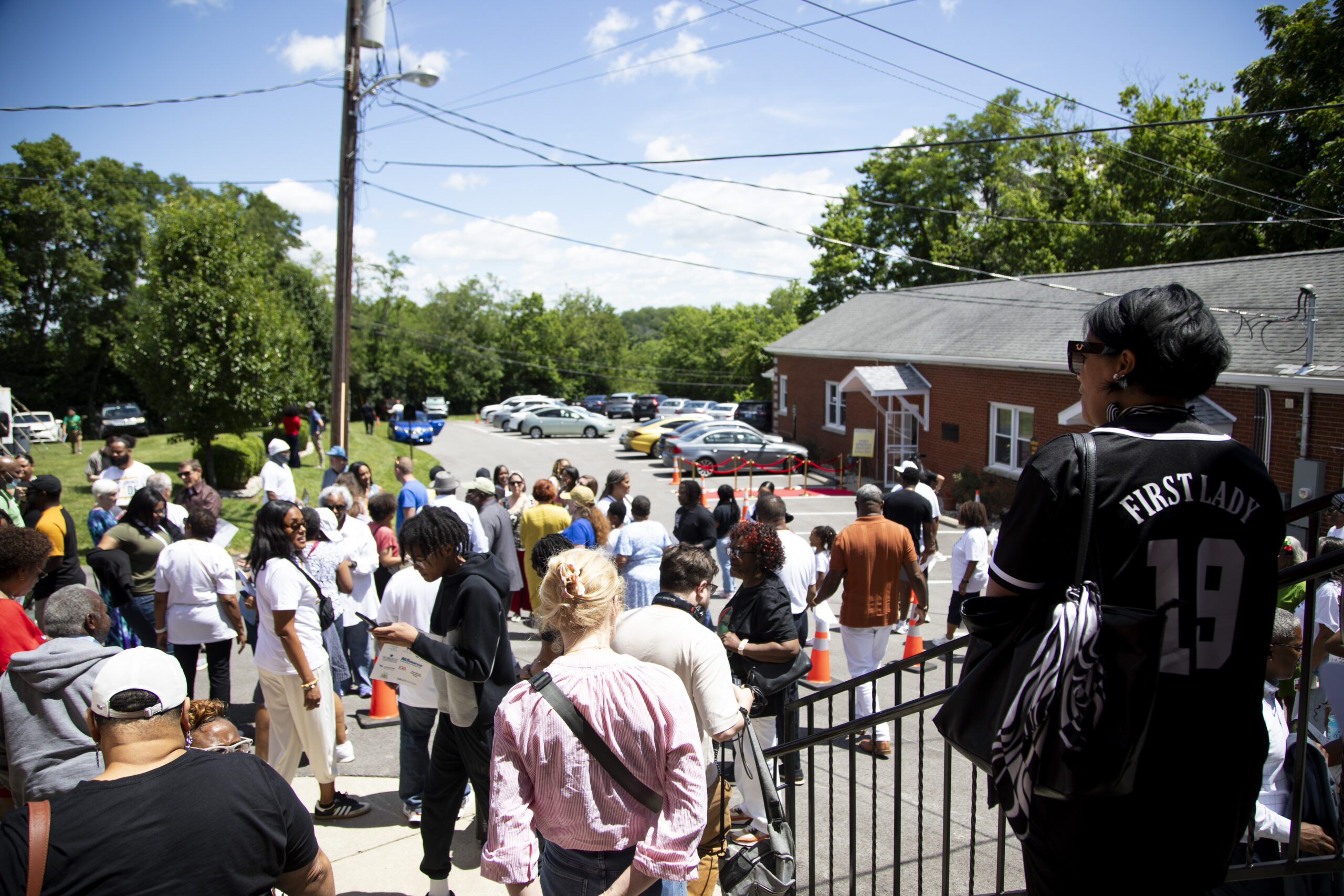 Fort Spring community members attend Juneteenth Celebration at New Vine Baptist Church in Lexington, Kentucky, on Friday, June 19, 2026. Isabella Sepahban/The Watchdog
Peoples said the ability to celebrate Juneteenth in a Black hamlet that has lasted for so long is an honor, and he wishes other historical Black hamlets that were lost and destroyed were able to do the same.
“While we’re here, we’re going to represent those who tried their best to be resilient through the times,” Peoples said. “It means a lot to us, not only because of our length of years, but the life in those years.”
The history of Fort Spring has been well documented by its residents and organizations such as A Sense of Place, according to Peoples, and the community continues to support the hamlet’s restoration.
“For them to not only be here, but to be interested in the history that’s here, to show that kind of support and interest, means a lot to us,” Peoples said. “It makes us all know that we’re not forgotten, that we’re still special, no matter how big or small the community is.”
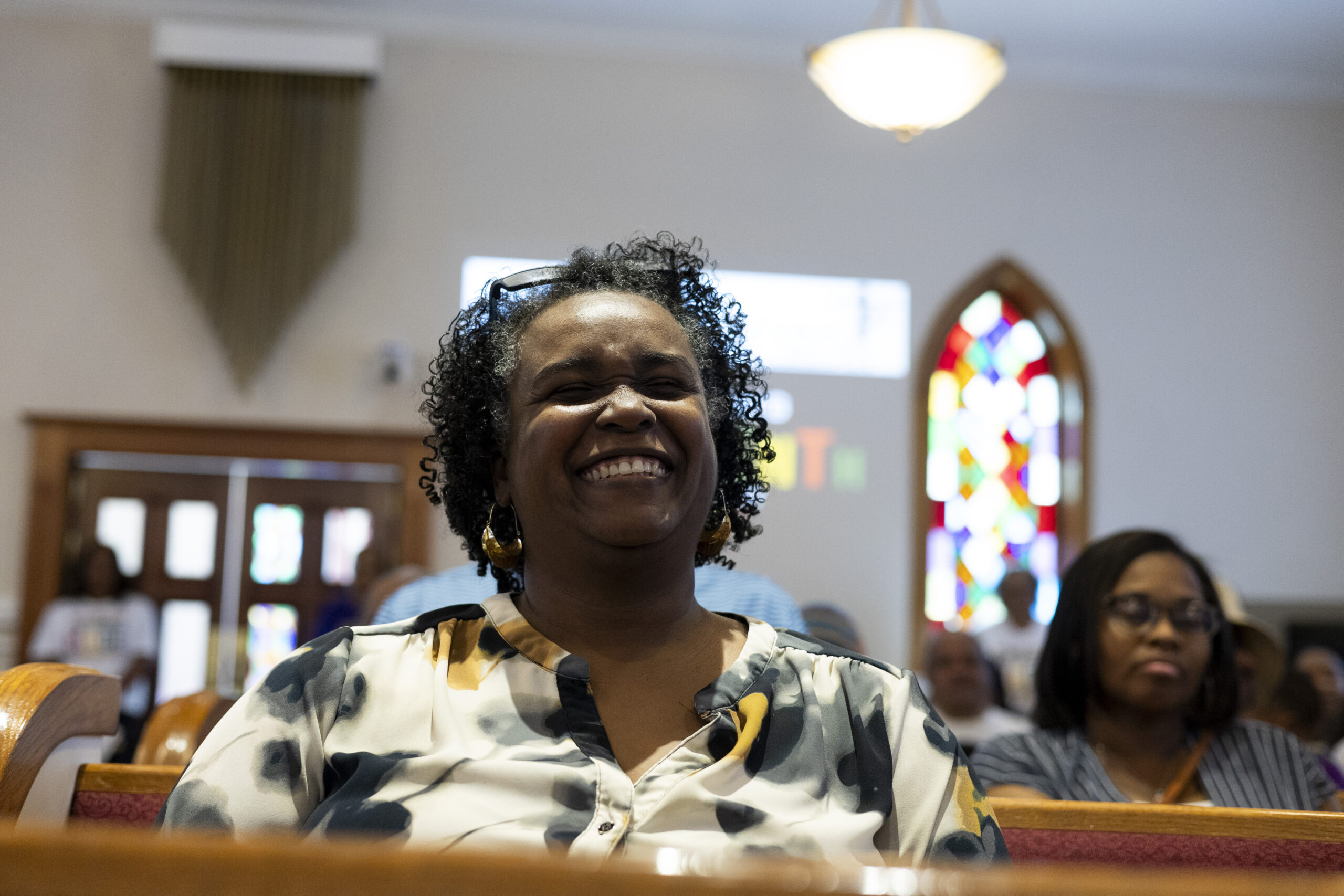 Torica Webb laughs during Juneteenth Celebration at New Vine Baptist Church in Lexington, Kentucky, on Friday, June 19, 2026. Isabella Sepahban/The Watchdog
Linnea Ramsey, who has lived in Fort Spring her entire life, said she does not see Juneteenth as a Black holiday, but rather a holiday for everyone to learn and bond with their communities.
As part of the walking tour, Ramsey told the story of her baptism in November 1961 while attendees visited the South Elkhorn Creek. Ramsey said the creek was used for baptisms for 87 years until the church’s renovation in the 1980s.
During her baptismal ceremony, the church congregation marched toward the creek while singing “Wade in the Water,” a hymn that was used by slaves during their attempts to become free, according to Ramsey.
“When slaves would hear that, they would know to get off dry land and into the water. What that would do is break the scent so slavemasters and their dogs could not follow the scent,” Ramsey said. “Some of the bordering cities were actually free states. Depending how good they could swim (and) where they went in, they could come out on the other side, maybe the Ohio side. So it had dual meanings.”
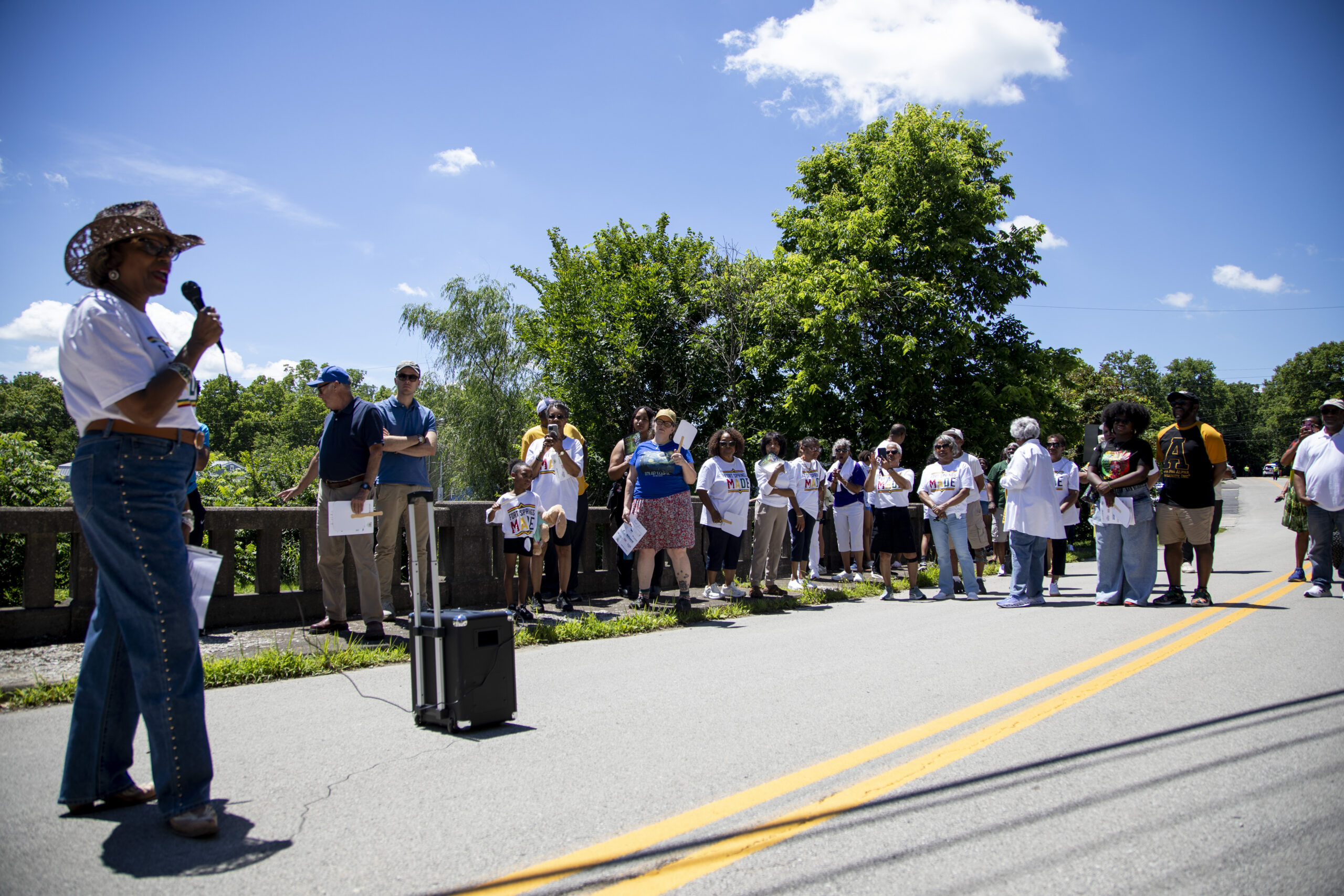 Linnea Ramsey tells the story of her baptism in the South Elkhorn Creek in November 1961 during a guided tour of Fort Spring’s hamlet structures during Juneteenth Celebration at New Vine Baptist Church in Lexington, Kentucky, on Friday, June 19, 2026. According to Ramsey, the creek was used for baptisms for 87 years until the church was renovated in the 1980s. Isabella Sepahban/The Watchdog
Since her baptism, Ramsey said she has been an active member of New Vine for 65 years and has enjoyed seeing the community around the church grow and former residents return to their homes.
“It was a community full of love, and it is still a community full of love,” Ramsey said. “People keep their families here. We still come together full of love, full of happiness and just wanting to celebrate together.”
Leave a Reply