
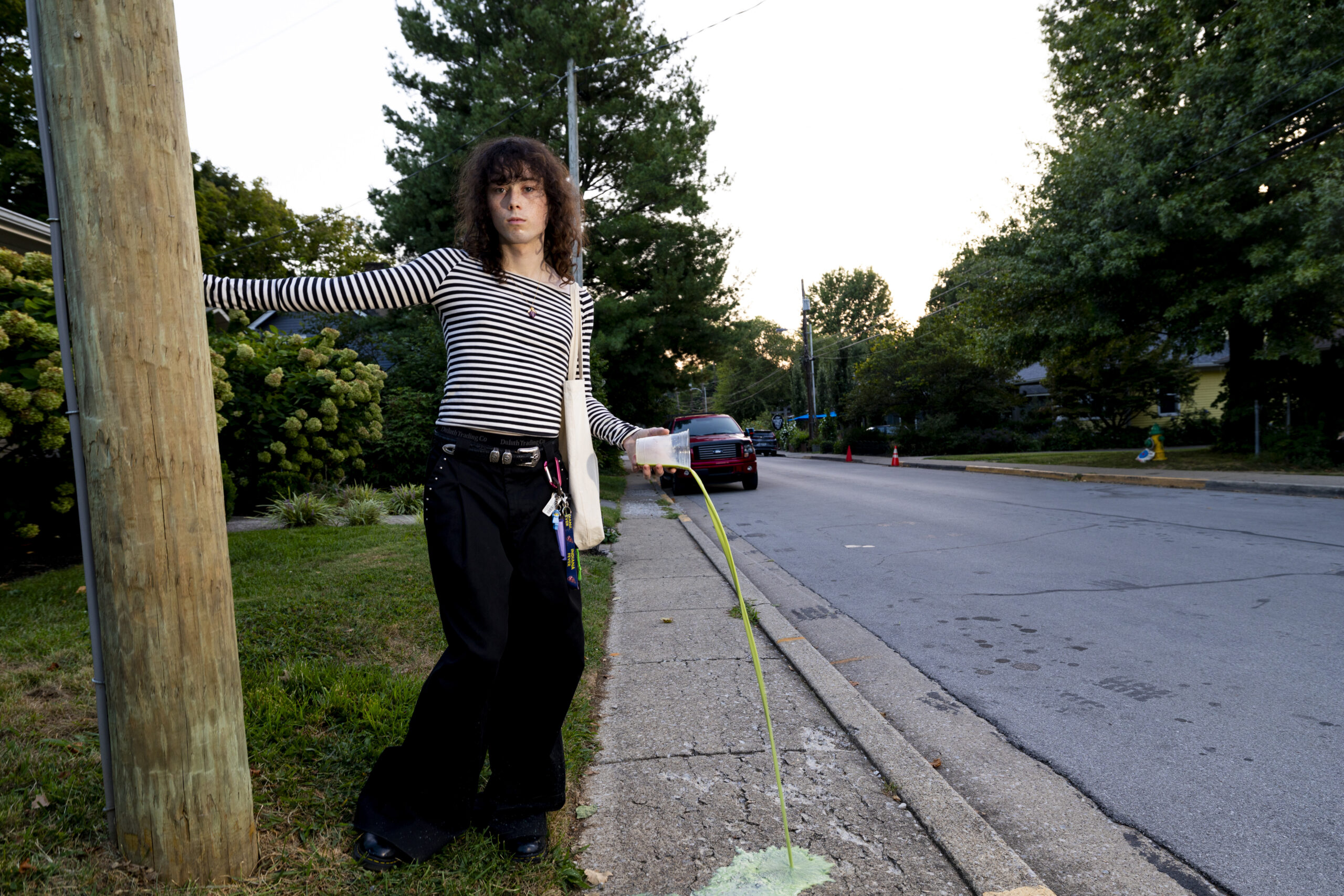
 Brady Saylor poses for a photo at Kenwick Table in Lexington, Kentucky, on Thursday, Sept. 17, 2026. Isabella Sepahban/The Watchdog
Editors’ note: Opinion articles published by The Watchdog provide perspectives of the writer separate from general Watchdog reporting.
With the continued deterioration of traditional gender roles and masculinity, it is evident that men are lost in the way of both seeing how to and demonstrating their own masculinity.
It leaves them with questions. What is tough? What is strong? What is manly? They question how to properly be a man, leading them down rabbit holes that turn into alt-right pipelines ending in individuals like Andrew Tate or Clavicular.
Some Gen-Z men, though, are producing new forms of masculinity through their clothing. Selvedge denim, small “thrifted” shirts, western buckle belts, leather boots and loafers, matcha lattes. These items are introducing the new look for men.
The key word here, though, is look. Many are skeptical of performative men, and rightfully so. Many people have falsely signaled a behavior based on the way they dress. Millennial hipsters, metrosexual Gen-Xers, and hippie Boomers are just some past examples of how looks have been used to deceive others.
This is the meaning behind the name of “performative men;” the look performative men have is a performance and not who they really are.
But can the performance provide a new portrayal of masculinity? Performativity is a social theory that outlines how actions create reality. Gen-Z are frequently calling others and being called performative for their want to be perceived as something while actually being something else. Can performative and performativity be intertwined?
What can performativity say about performative men? Will carrying around bell hooks or Sylvia Plath engender a new gender? Or is this another form of covert misogyny?
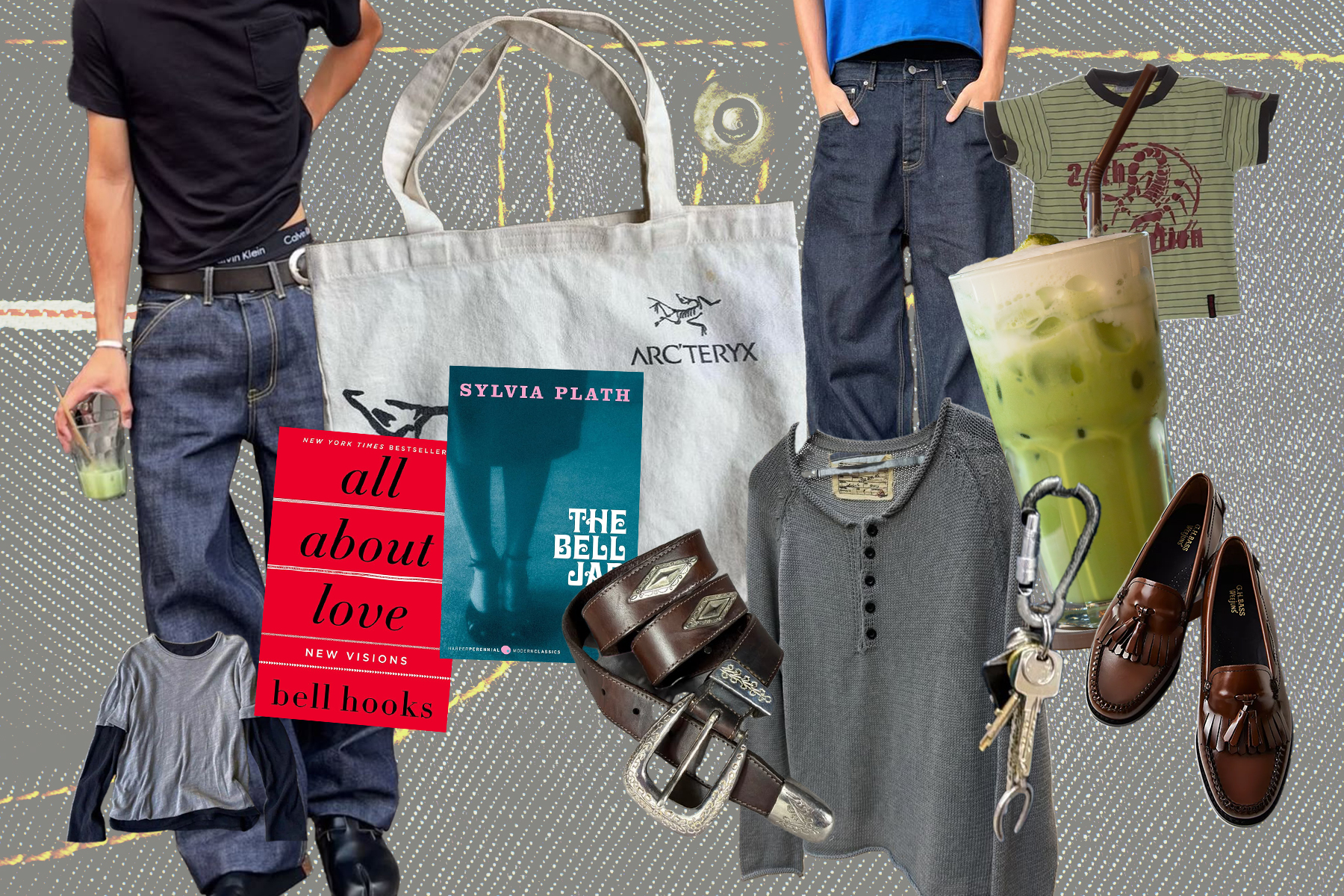 Illustration by Kamryn Lin
Judith Butler, a gender theorist and the creator of gender performativity, argues gender is a performance or series of actions that are either produced or reproduced from societal norms. These actions then realize gender into our bodies and society.
For instance, what makes make-up “girly?” Does it have an inherent gender or is it because the actions of wearing make-up is seen as feminine? Of course, the latter is true. Objects, including people, do not have an inherent gender. Gender comes from the societal norms around us and the actions we take from them.
Gender can permeate even further in other cultures with gendered and genderless language. A Harvard study on genderless languages found that people who speak genderless languages at home are more likely to be neutral in their attitudes toward gender roles. Thus, gender is an act that is socially constructed, then realized into existence.
 Brady Saylor poses for a photo at Kenwick Table in Lexington, Kentucky, on Thursday, Sept. 17, 2026. Isabella Sepahban/The Watchdog
Brady Saylor, a self-identified former performative man, has gained a lot of experience from her time as a performative man, the actions she has taken, and the societal expectations that have affected her lived reality.
While on a date with a woman, Saylor played the guitar for her date and felt it was cliche.
“I could only think of myself in the third person as this embarrassing, tryhard boy doing too much,” Saylor said.
These performative actions allowed Saylor to be self-reflective.
“I could almost begin to see what she saw, what she would be seeing in me that she was attracted to,” Saylor said as she recalled when women would be attracted to her. “But as I was seeing that reflection of myself, I was like, ‘This is wrong.’”
Being self-aware is evident in the lives of all people as we perform certain actions throughout the day. As performative men act out certain traits common among them, such as drinking matcha lattes, they can be self-aware of how they are being perceived.
The performative man may think to himself, “Oh, does the barista think I’m a guy who orders matcha because it’s cool now? I really do like the taste of it, though.”
Saylor’s self-awareness continued, especially in the ways of her feminism. Saylor has always identified with being a feminist and being liberal. However, when she was a performative man, she struggled with how she was viewed.
 Brady Saylor poses for a photo at Kenwick Table in Lexington, Kentucky, on Thursday, Sept. 17, 2026. Isabella Sepahban/The Watchdog
“I earnestly believed everything I said,” Saylor said, “but it was almost like having that self-awareness of a male archetype or what that reflection might say about you.”
This is common among many people in progressive spaces. Many people experience a certain imposter syndrome when around other progressives and have a feeling that they don’t belong. Performative men can have this same imposter syndrome as well, especially when they are seen as not really believing in feminist or progressive views.
In Saylor’s case, this male archetype reflected upon them did not reflect how she actually felt internally. Saylor now identifies as non-binary and transfemme.
“I think it was a lot of the experiences of dating and just meeting people in college that really forced me to kind of wake up to how uncomfortable performing masculinity made me feel,” Saylor said.
Saylor still identifies with being a feminist, but no longer in a way of feeling scared of being seen as performative.
However, this is not to say that because they engage with femininity in their lifestyle, all performative men will awaken and figure out their trans identity. Straight, cisgendered men have been engaging in feminine actions for as long as femininity became a social construct. For example, the metrosexual man.
Coming out of the late 90s and early 2000s, the word metrosexual described a man who lived in a city, enjoyed fashion and grooming but was straight.
The issue with the term metrosexual, though, is the feeling of internalized homophobia. Many people used the term to separate their identity from queer people. Are we reproducing this arc or similar arcs with performative men?
In an interview with Las Culturistas, Lucy Dacus made an argument for the guy with the dangly earring, calling on queer people to be inclusive of feminine, straight men.
“First of all, sometimes you wear the costume before it becomes the clothes,” Dacus said.
Similar to Butler, the actions become the identity.
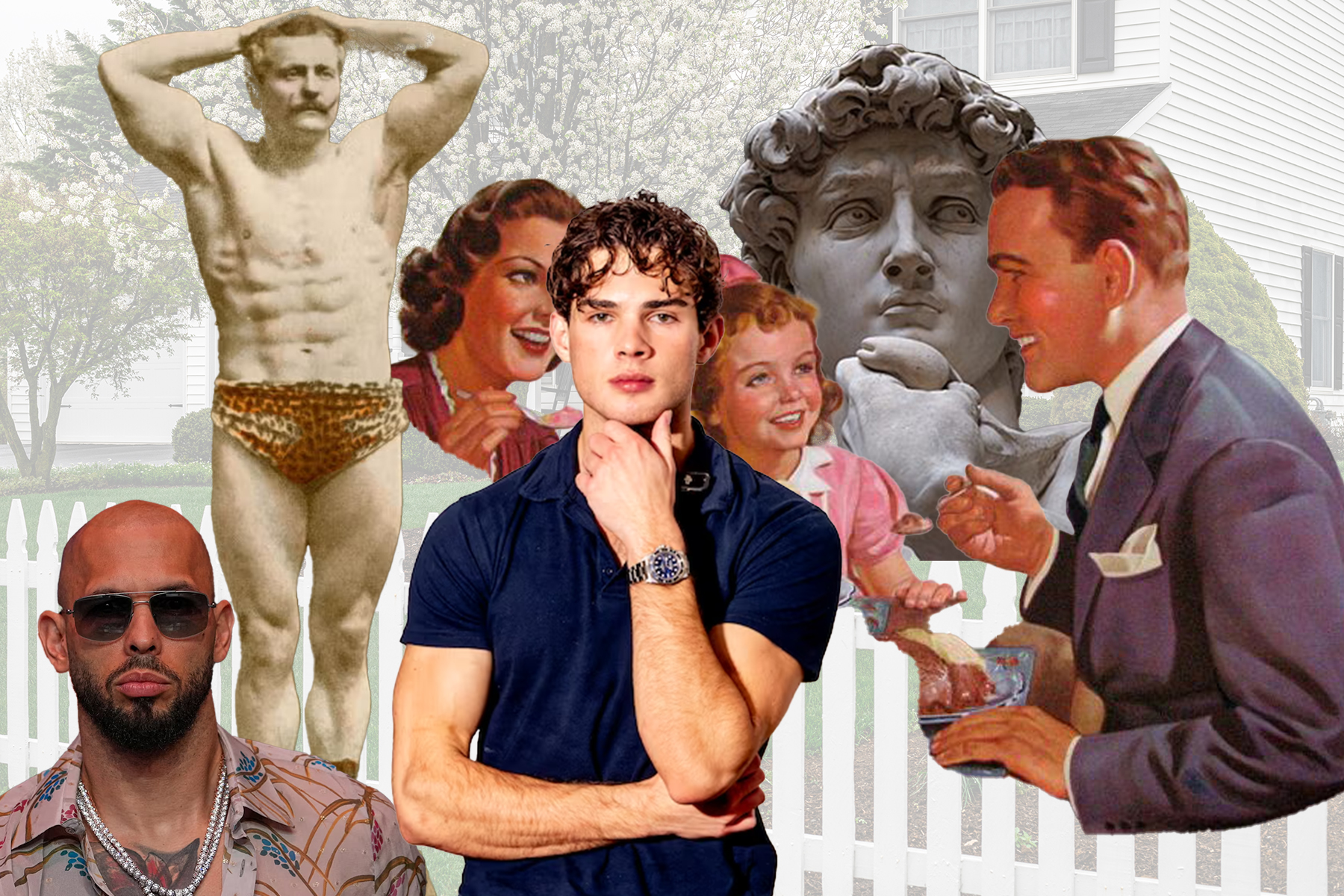 Illustration by Kamryn Lin
Do you think you just fell from a coconut tree? No! We as humans are who we are because of the experiences and actions we have taken and of those who came before us.
While we no longer call men metrosexual, the men of the late 90s and early 2000s who engaged in this trend allowed other men to visualize a different form of masculinity. David Beckham is a prime example of a man who was called metrosexual but has opened the doors for other men to explore fashion and feminine-coded things while still being viewed as masculine. In other words, the actions taken by metrosexual men realized a new form of masculinity and manhood.
An issue found with performative men, however, are their current beliefs and intentions. Commonly, people find that the performance is all that– an act. People are finding that performative men are wearing more feminine clothes and engaging in feminine items just because they want to attract women. Sometimes, the men don’t even really believe in feminism and still want control over women in a different, more covert way than Andrew Tate.
Nevertheless, the actions of performative men aren’t inherently evil. Commonly, the performative man is seen sitting in a coffee shop, drinking a matcha latte while “reading” feminist literature and listening to Clairo. While the purpose of the performance may be different from man to man, the act can bring a needed change in masculinity.
 Various items are seen on a table at Kenwick Table in Lexington, Kentucky, on Thursday, Sept. 17, 2026. Isabella Sepahban/The Watchdog
Coffee shops are great connectors of communities and a performative man buying from them supports local businesses. The performative man then might start conversation with others, and others may ask about the feminist literature they are reading. These conversations are generative, leading to a better understanding of gender and marginalized people with the possibility of leading to actions such as attending protests, learning about mutual aid and volunteering in local organizations.
While not all performative men may take this route, it does not negate the power of the actions of performative men. As some men are pushing for traditional gender roles, the actions taken by performative men may provide new outlets for men to understand their gender and engage with feminism, queer rights, civil rights movements and actions for marginalized people.
This is extremely important for boys and young men. As Saylor put it, “You see so much bad advice for men as a boy growing up.” Having role models like performative men who engage with progressive views and alternative versions of masculinity can be eye opening.
Instead of being harsh on performative men and outcasting them for being performative, we should instead be open to them and continue to introduce them to more and more progressive views. Some may leave the lifestyle behind, but many may keep it, learn more about themselves, and feel more included in progressive circles.
Performative men may be wearing a costume now, but maybe this will produce a new form of masculinity and manhood that can be extremely healing.
Leave a Reply